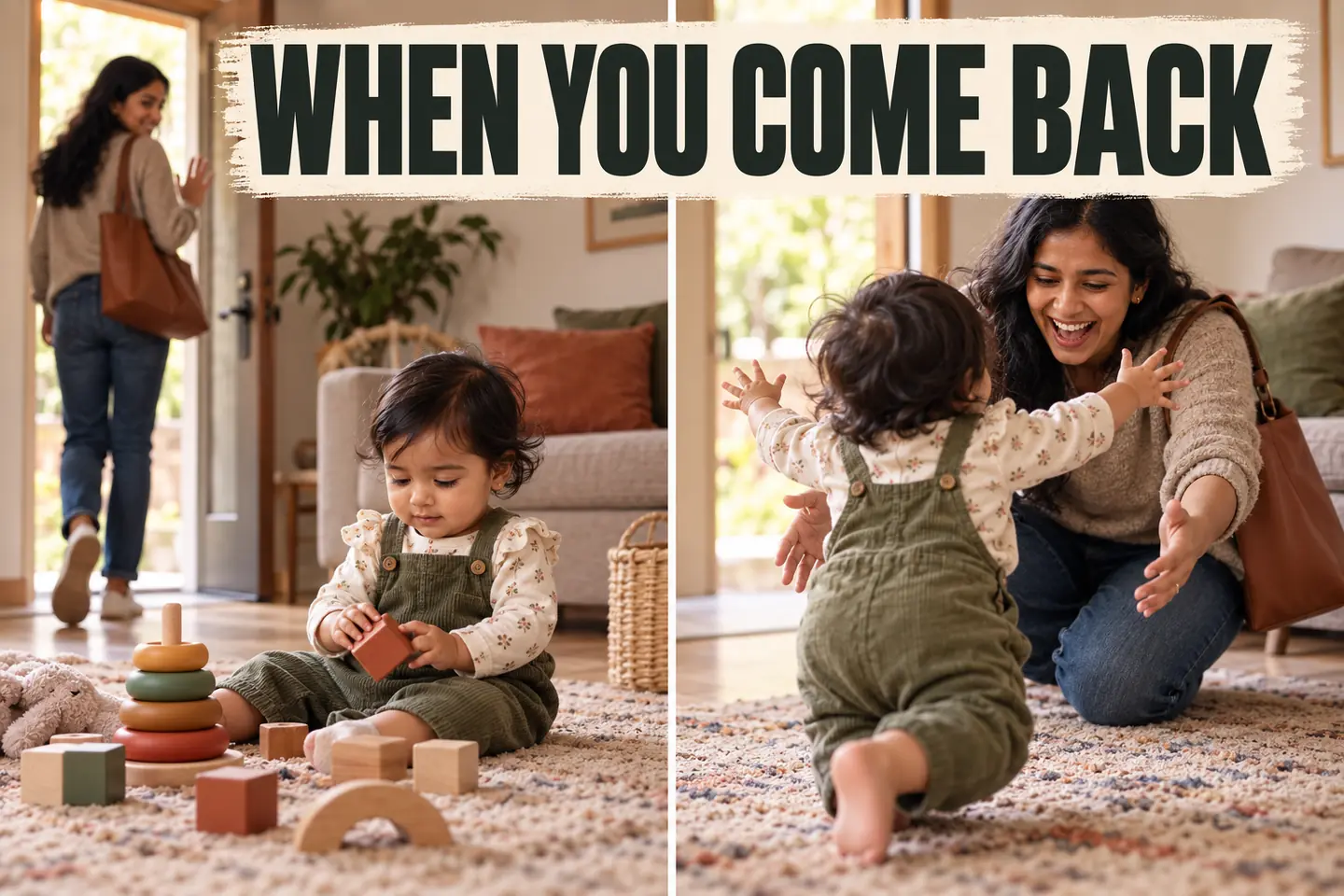
Offer a little settling-in time, then ask about one small moment. Accept “I don’t want to talk yet.”
“How was school?” asks a child to summarize hours of lessons, friendships, games, and feelings in one answer. “Fine” may be the easiest response available. It doesn’t tell you whether the day was wonderful, difficult, or simply hard to describe.
You can keep the conversation open without asking ten questions in a row. Try making room for a pause, then asking about one ordinary detail.
Let the arrival happen first Some children want to talk immediately. Others want to eat, rest, move, or sit quietly. You might say, “I’m happy to see you. Would you like to talk now or later?”
Follow your child’s pace. If they need quiet, give them some breathing room. If something is bothering them and they want to talk straight away, make room to listen.
Choose a smaller doorway Try one of these questions when your child seems ready:
- “What did you do at break?”
- “Was there a moment that made you laugh?”
- “What felt tricky today?”
- “Is there anything you want me to know?”
Ask one and listen. If the answer is short, resist filling every pause with another question. You can share a small moment from your own day without expecting a matching story.
Let another activity carry the conversation A chat might happen while drawing, taking a walk, or building with blocks. The CDC’s guidance on child-led play emphasizes letting children lead and giving them attention; that spirit can help you leave space rather than directing every moment.
Keep an activity enjoyable in its own right. A game should not become a disguised interview that your child needs to pass.
Listen before solving If your child says something was unfair, try “Tell me more” before proposing what they should do tomorrow. Ask whether they want help with a plan, comfort, or simply someone to hear them.
If they describe bullying, harm, or something unsafe, take it seriously and follow up with the appropriate adults. Accepting a quiet afternoon doesn’t mean ignoring a concern. For ordinary days, “We can talk later” is a perfectly useful ending—and an invitation you can keep.
Further reading
Adapt these ideas to your family. For concerns about your child’s health or development, talk with a qualified professional who knows them.

Daniel Brooks
Play, connection & family life
About this author