Enjoy the imitation, notice what you model, and make a small change if needed. A pretend conversation is a mixture of experiences, not a full assessment of your parenting.
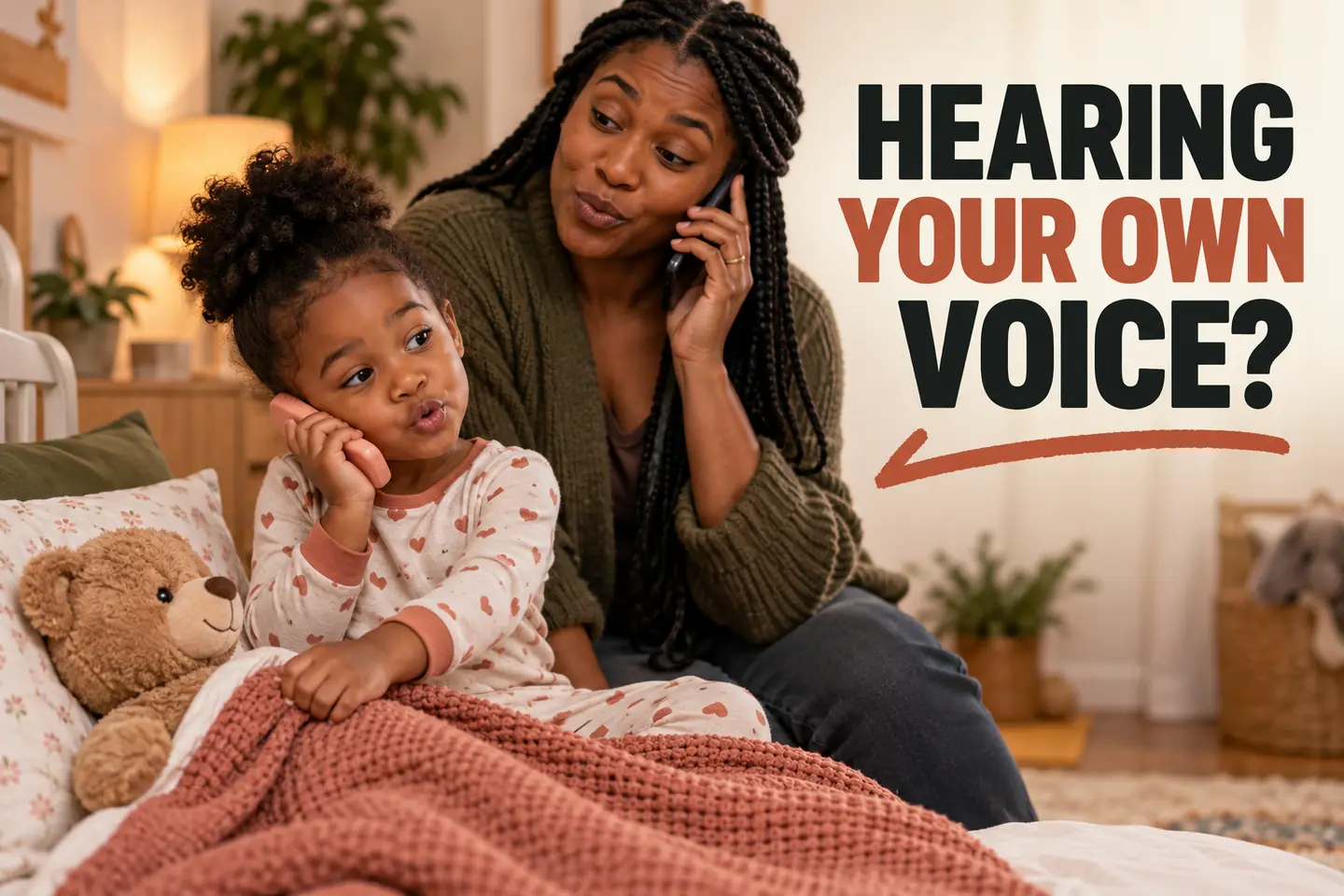
From the next room comes a familiar sentence in a very small voice: “One thing at a time, please.” You look over. Your child is addressing a stuffed bear with your exact pause and hand gesture.
Children often bring language and actions they have observed into their play. A parent may be one source, alongside siblings, caregivers, books, and other experiences. Hearing your phrasing can be funny, tender, or uncomfortable, but one pretend conversation is not a complete report on how your child experiences family life.
Familiar actions make useful play material
A child sees adults answer phones, prepare meals, care for others, and explain what happens next. Those actions can become the building blocks of a game. The CDC includes copying everyday chores among common eighteen-month behaviors, and the AAP describes pretend play as a place to try different roles.
As language and imagination develop, your child may add dialogue: a bear needs rest, a toy has lost its shoe, or an imaginary caller has a question. The story can borrow real details and then go in a completely invented direction.
Listen without turning play into an interview
If the scene makes you curious, comment lightly: “Bear is getting ready for bed.” Let your child decide whether to explain more. Avoid interrupting with several questions about who said which phrase and when.
If they invite you into the game, ask what role they want you to take. You may discover that the line you recognized belongs to a bus driver in today's story rather than a parent. Play does not have to preserve the original context of a sentence.
When the imitation makes you smile
Enjoy it without requiring your child to perform it again for a recording or a group of adults. A spontaneous moment can lose its ease when everyone asks for another version.
You might say, “I heard you helping Bear find a comfortable spot.” That acknowledges the scene itself. There is no need to make your child responsible for being especially cute, wise, or entertaining.
When you hear a phrase you want to change
Take the information as a prompt for reflection rather than proof that you have failed. Perhaps you notice that “Hurry up” appears often, or that the bear receives a long lecture over a tiny mistake.
Choose one practical adjustment in your own speech. Replace a broad command with a clear next step, or use a shorter response when everyone is tired. If you spoke unkindly to your child earlier, make a direct repair with them rather than correcting the toy's conversation.
For example: “I sounded cross about the shoes. I’m sorry I shouted. Next time I’ll explain what help we need.” Keep the responsibility with you.
Model the ordinary words you want available
Let your child hear adults ask for help, acknowledge mistakes, express frustration without insults, and thank each other for specific actions. These do not need to be staged lessons. “I can’t open this. Can you help me?” is useful language in an ordinary household moment.
Expect a mixture in the play afterward. Your child may copy a gentle phrase and a dramatic line from a story in the same scene. You can keep modeling what matters while leaving space for imagination.
The next time your own voice comes back from the toy corner, listen with curiosity. You may find a phrase to keep, a habit to adjust, or simply a child making a story from the people and moments they know.
Further reading
AAP: Pretend Play and Children’s Imagination
Adapt these ideas to your family. For concerns about your child’s health or development, talk with a qualified professional who knows them.

Sophie Laurent
Simple routines & calmer evenings
About this author