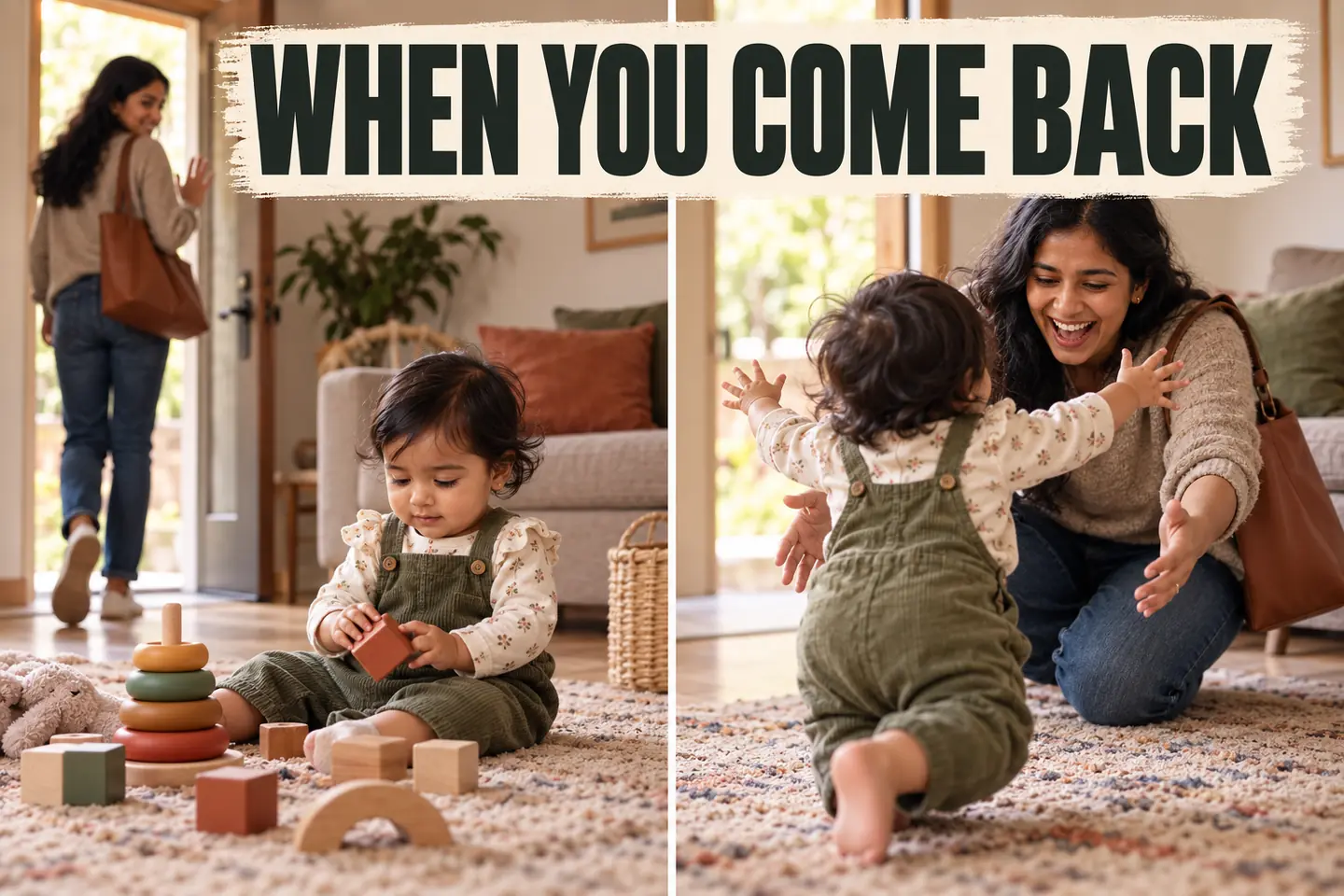
Check whether your child needs information, reassurance, or a turn in the conversation. Make the answer easy to revisit without turning repetition into a battle.
“Who is picking me up?” “Grandma.” A few minutes later: “Who is picking me up?” You answer again. Your child can tell you the answer when asked, so why does the question keep returning?
Repeating a familiar question can serve several purposes. A child may be checking that the plan is still the same, enjoying a predictable conversation, practicing words, or wondering about something your answer did not cover. Knowing the answer once does not necessarily explain what they need from the next exchange.
Check the question behind the question
Try a gentle follow-up: “Are you wondering when Grandma will come, or what you’ll do together?” Your child may reveal a different uncertainty. Perhaps the real concern is whether you will be home afterward.
For a question about plans, use something concrete: “Grandma comes after your afternoon snack.” Avoid giving a clock time to a child who does not yet find it meaningful. You can explain a changed plan simply without promising that schedules never change.
Make the answer available outside your next sentence
An ordinary picture can help with a repeated routine question. Point to the caregiver's photo, draw the few main events of the day, or place an item by the door that signals the next activity.
Keep the reminder simple. A full-color schedule with twenty steps may create more information than the child needs. The CDC's routine guidance emphasizes predictability; a short, familiar sequence is often a practical place to start.
When the question returns, you can answer briefly and refer to the reminder: “Grandma, after snack. Here she is on our plan.”
Sometimes the exchange itself is enjoyable
A child may like hearing you name the same animal in a book or reply to the same playful question. If the repetition is comfortable for both of you, you can participate without trying to eliminate it.
You might swap roles: “You ask me, then I’ll ask you.” Keep it playful rather than setting a trap to prove they already knew. If they do not want the turn, simply continue reading or move to another shared activity.
Set a limit without dismissing the child
When you need to concentrate, say so: “I’ve told you the plan. I need to finish this call, and then I can listen again.” Offer the visual reminder if it helps, and return when the task is finished.
Avoid making a promise about the future just to end the question. “Nothing will ever go wrong” is an answer you cannot keep. A smaller, accurate answer gives your child information they can actually use.
Notice when reassurance is not settling a worry
If the same fear keeps returning and repeated answers provide little relief, ask what feels difficult rather than supplying more and more certainty. Listen calmly and describe what support is available.
Persistent worry that interferes with sleep, separation, play, or daily activities is worth discussing with a qualified professional. Repeated questions can also relate to communication needs; seek advice if the broader pattern concerns you.
For everyday repetition, vary your response to fit the purpose: an answer for missing information, a little connection for a familiar exchange, and a clear pause when you are busy. You do not need a clever new sentence every time.
Further reading
CDC: Tips for Connecting and Communicating
CDC: Tips for Relying on Routines and Rules
Adapt these ideas to your family. For concerns about your child’s health or development, talk with a qualified professional who knows them.

Sophie Laurent
Simple routines & calmer evenings
About this author