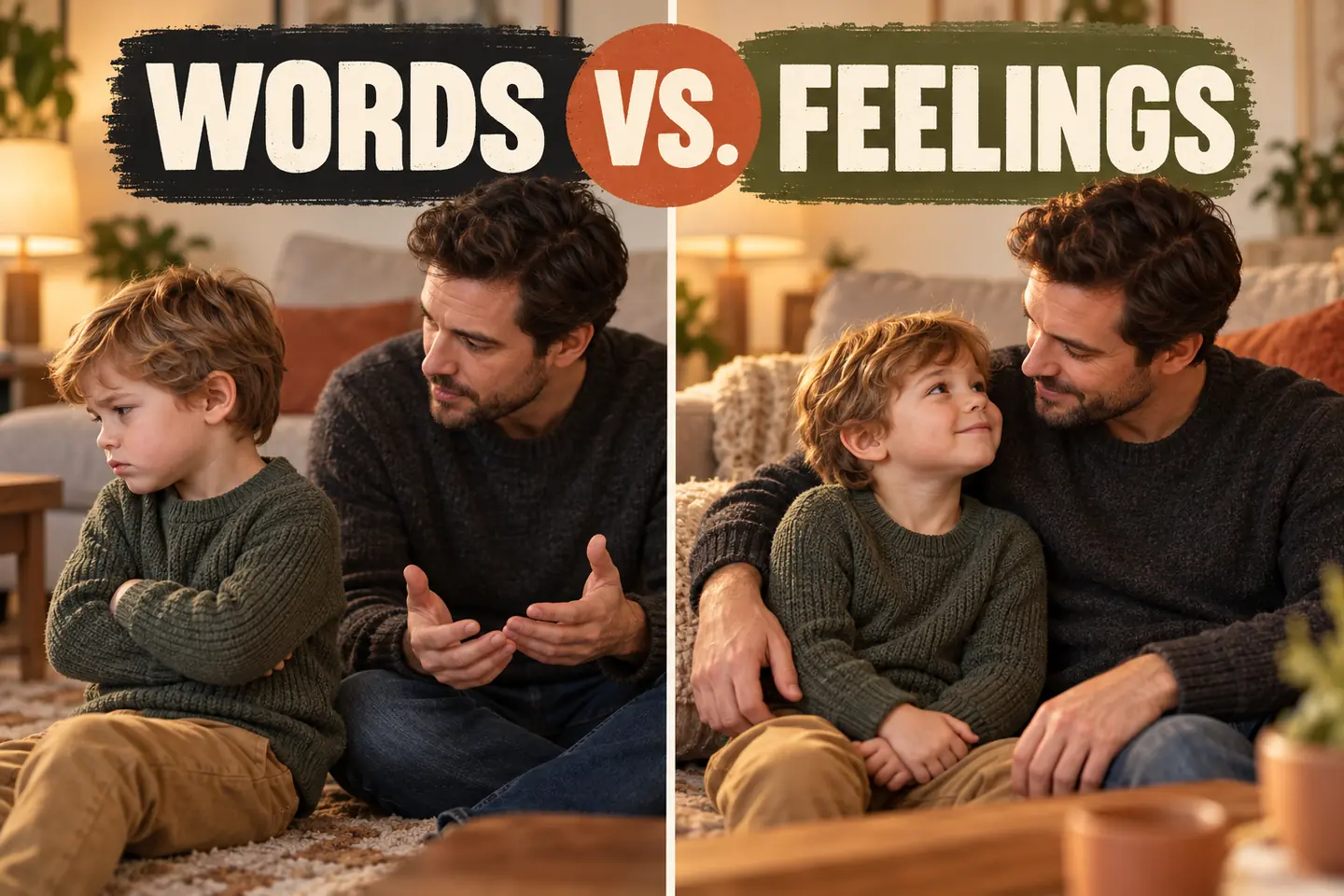
Keep your reply steady, hold the necessary limit, and teach a clearer phrase later. Do not ask your child to repair your feelings during the outburst.
You say there is no more screen time. Your child folds their arms and delivers the sentence you did not expect: “I don’t love you.” You know they are upset. It still hurts.
Strong words can arrive when a young child is angry, disappointed, or trying out language they have heard. They can also signal something the child wants you to understand. You cannot know the exact meaning from the sentence alone, and you do not have to settle that meaning during the most heated moment.
Take one breath before replying
Give yourself a small pause so the response is not a hurtful sentence in return. If the situation is safe, lower your voice and keep your first words brief.
Try: “You’re really upset with me. I love you, and the screen is finished for today.” This acknowledges what you can see while keeping the boundary clear. If you are unsure of the feeling, “Something feels really hard right now” leaves space for your child to correct you.
You do not need to insist, “Yes, you do love me,” or ask for a reassuring hug. That can turn the moment into an argument about the relationship instead of the problem.
Make room for feelings without accepting hurtful actions
The AAP's guidance on conflict encourages helping children put anger into words while avoiding harm. If your child hits, throws, or moves toward someone aggressively, stop the action and prioritize safety.
You can say, “You can be angry. I won’t let you hit.” Move objects or create space as needed. Keep the explanation short until your child can take in more.
With words alone, avoid escalating into a demand for immediate affection or an elaborate apology. You can address respectful speech once the moment is calmer.
Teach a replacement that says something useful
Later, return briefly to the situation: “You were angry when the show ended. Next time, you can say, ‘I’m mad. I wanted more time.’”
Practice the phrase together if your child is willing. Do not demand a cheerful tone; the goal is understandable, safer communication. For a child who uses gestures or other communication support, make that alternative available too.
You can also ask, “Was there something else you wanted me to know?” Listen to the answer without automatically changing the original decision.
Handle your hurt with adult support
It is okay to feel shaken. Talk with another trusted adult later, take a short break when your child is safely cared for, or reflect on why the words landed so heavily.
Avoid giving your child responsibility for making you okay: “After everything I do for you, how could you?” asks them to carry more than the original disagreement. You can model that words matter through a calm repair conversation without presenting your love as something that might disappear.
Look for repeated concerns, not just one sentence
If hurtful exchanges are frequent, look at patterns in the day and in how conflicts unfold. Persistent distress, aggression, or serious relationship difficulties deserve support from your child's clinician or a qualified family professional.
For a single hard moment, aim for a steady response and a later chance to learn. The sentence can hurt without needing to define the whole evening—or your relationship.
Further reading
AAP: Helping Your Child Cope with Conflict
CDC: Tips for Connecting and Communicating
Adapt these ideas to your family. For concerns about your child’s health or development, talk with a qualified professional who knows them.

Emma Bennett
Everyday parenting & big feelings
About this author