Support the new skill and the need for closeness separately. Check ordinary causes of discomfort before assuming a developmental leap explains everything.
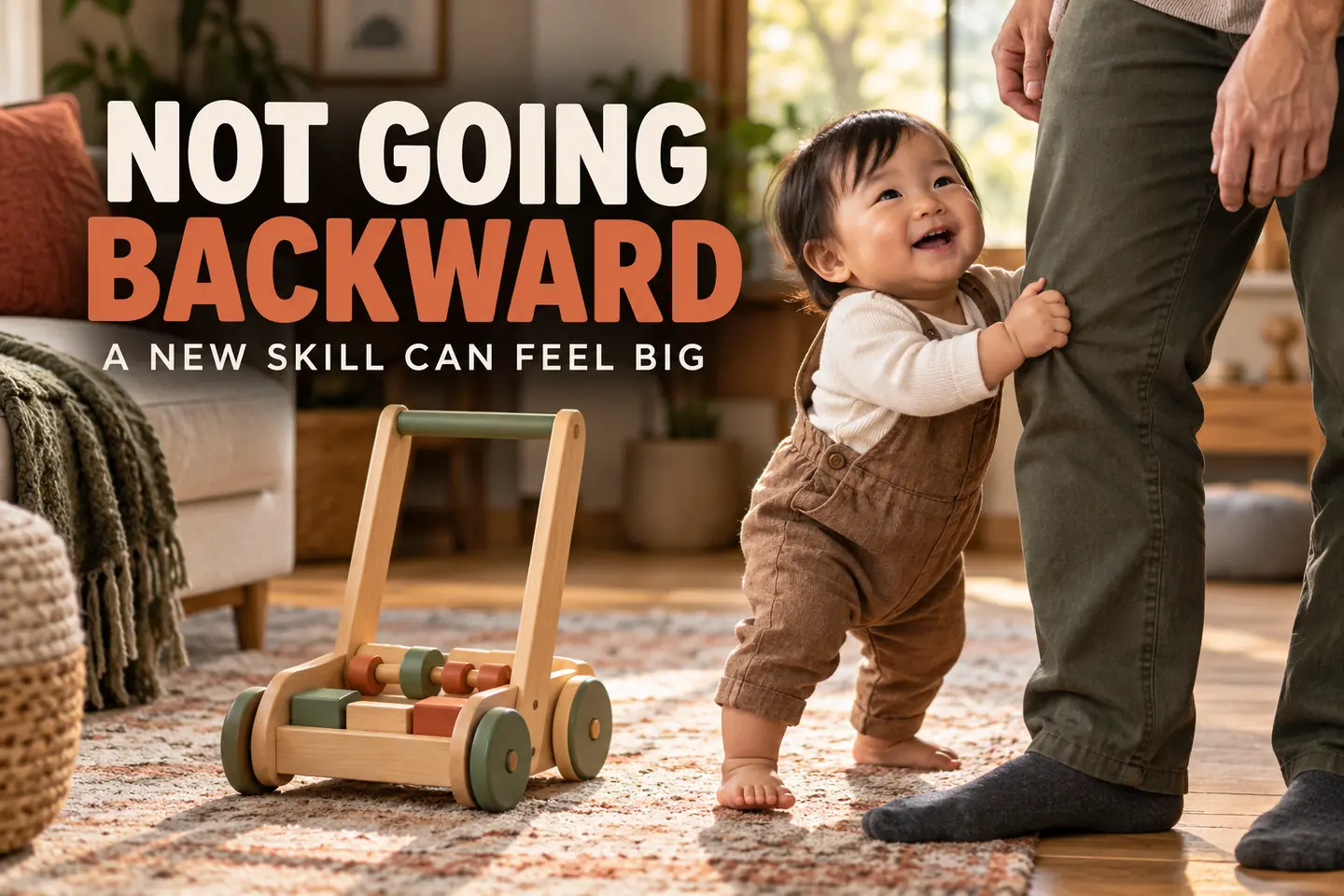
Yesterday brought a first wobbling step. Today your baby wants to be held while you make breakfast. It is tempting to join those two events into a neat explanation: learning to walk must have caused the clinginess.
They may happen together, but timing alone does not establish a cause. Clinginess can vary with separation concerns, tiredness, unfamiliar situations, illness, or changes at home. A newly learned skill is useful context, not a reason to stop checking what your baby needs today.
Progress does not mean needing less comfort every day
A child can be eager to move and still want you close. Being able to take a few steps does not make every room feel familiar or every separation easy. ZERO TO THREE describes separation responses changing through the early years rather than following a perfectly steady path.
Instead of asking whether your baby has become less independent, ask what the current situation demands. Crossing a quiet rug after a nap is different from being put down in a crowded room at the end of the day.
Run through the ordinary possibilities
Check meals, rest, temperature, and signs of discomfort. Think about a changed caregiver, travel, visitors, or a day when everyone has been rushing. You do not have to find a single explanation before offering comfort.
If the clinginess is a marked change and your child seems unwell or in pain, contact their clinician. Avoid attributing fever, unusual tiredness, or persistent distress to a growth phase without checking.
It can help to note a few details for yourself: when the change began, when your child seems most comfortable, and whether anything else has changed. A short observation is more useful than a strict “leap” calendar telling you what must be happening.
Make room for practice and a return
For a new walker, choose a safe, uncluttered floor area and stay nearby. Offer an opportunity, then let your child decide whether to try. Repeating “Show everyone!” can turn something interesting into a public request they do not want to meet.
If they come back to your knee, pause with them. You might say, “You’re taking a break. I’m right here.” Then wait. They may try again, choose another activity, or be finished for now.
Keep everyday separations clear and manageable
When another familiar adult is caring for your child, tell them briefly what is happening: “Dad is staying with you while I get dressed.” Use a predictable goodbye rather than disappearing and reappearing repeatedly to test the response.
Where possible, keep the surrounding routine familiar during a difficult patch. That could mean the usual book before a handover or the same comfortable place to play. You do not need to put all family life on hold.
Know the difference between wanting help and losing a skill
A toddler who asks to be carried may still be perfectly able to walk. A child who can no longer use a previously established ability deserves a conversation with their clinician. The CDC advises acting on lost skills and developmental concerns rather than waiting for a phase to pass.
For an ordinary clingy day, respond to the child in front of you: comfort, check practical needs, and offer gentle chances to explore. A new skill and a wish to be held can share the same afternoon.
Further reading
ZERO TO THREE: Separation Anxiety
Adapt these ideas to your family. For concerns about your child’s health or development, talk with a qualified professional who knows them.

Daniel Brooks
Play, connection & family life
About this author