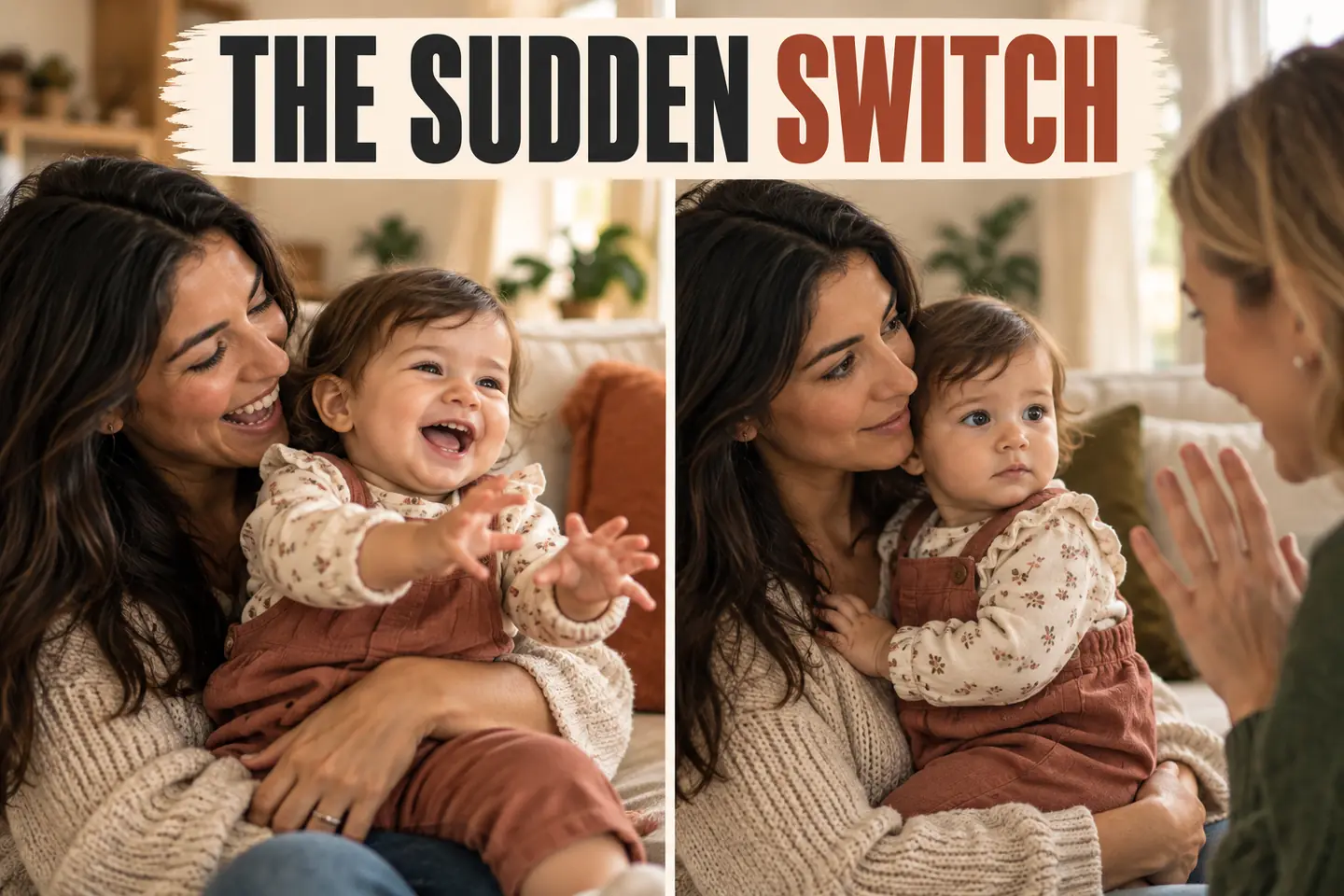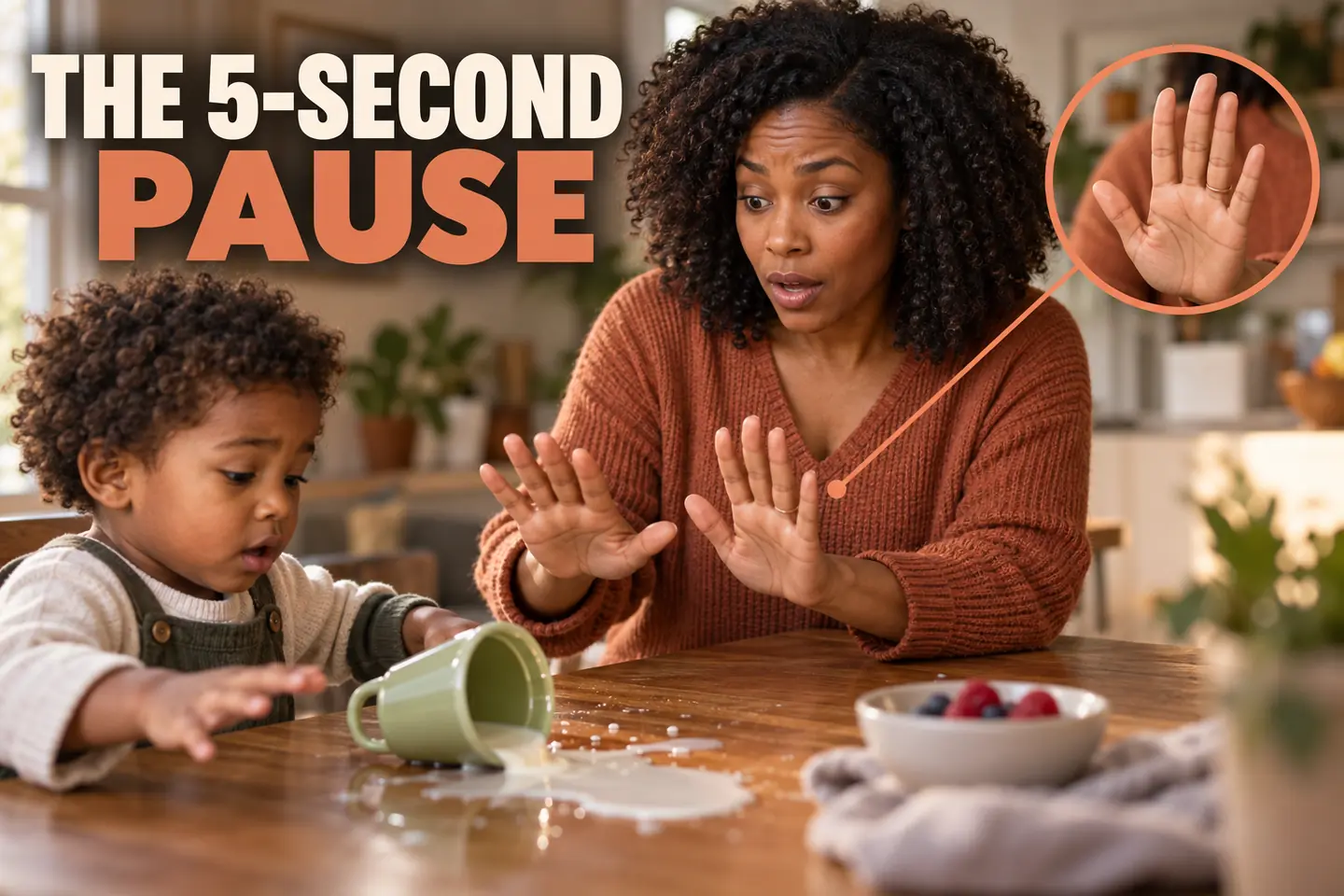
Before reacting to an ordinary accident, ask how you would speak to a welcome guest. Then use that respectful tone while helping your child take responsibility.
The cup tips. The drink spreads. You’ve already cleaned the table twice, and you can feel a sharp sentence arriving before you’ve decided to say it.
Here is a small question to place in that gap: if a friend had accidentally done this, what would your first words sound like?
That’s the useful idea behind the “Guest Test.” In November 2025, Motherly reported 8.7 million views for a reel from @mom.outofoffice about responding more calmly to a child’s spill. It’s a familiar frustration: you want to respond gently, but you’re tired of clearing up.
Give yourself a sentence you can actually use Choose words that sound like you. You might say: “The drink spilled. Let’s get a cloth.” It identifies the problem and the next step without turning the accident into a description of your child.
You don’t need to feel cheerful about the mess. You can be tired, disappointed, or worried about the furniture while still choosing a respectful first sentence. Save the explanation of where drinks belong for a moment when you can both hear it.
If the spill involves something hot, broken glass, or an electrical hazard, deal with the danger immediately. A pause is for ordinary frustration, not a reason to delay protecting someone.
Give responsibility a clear shape A child can help without being shamed. Think about what they can safely do: bring a towel, move their cup to an adult-approved place, or wipe a small area with water while you handle the rest.
For example, after water lands on a washable table, you could say: “You can wipe this side while I dry the floor.” That’s a manageable contribution. “Look what you’ve done” leaves the child with your reaction but no clear task.
Adults should handle cleaning chemicals and any dangerous debris. For very young children, watching how you respond may be their main part in the cleanup.
Change the setup that keeps causing the problem Once the immediate mess is handled, look at the scene rather than just the child. Is the cup beside an elbow? Is the table crowded? Is the container awkward to hold?
Try moving one thing. Put the drink away from the drawing paper, offer a suitable cup, or show where it can rest. Repeated accidents sometimes need a different arrangement, not a more forceful reminder.
Ask your child for an idea if that fits their age: “Where could this go so we have more space?” You’re solving a practical problem together, not asking them to promise never to make another mistake.
If you’ve already raised your voice, repair the moment You can return with a short, direct apology: “I shouted. That was too loud, and I’m sorry. We still need to clean this up.” There’s no need to make your child reassure you or explain that they caused your reaction.
The American Academy of Pediatrics encourages adults to model calm behavior and manage their own anger. If you regularly feel close to losing control, seek support from another trusted adult or a qualified professional. A catchy cue is one small tool, not the whole support system.
Try the question with the next ordinary mishap. The goal is a response you can stand behind, even while you reach for another towel.
Further reading
Motherly: The 5-second trick this mom uses to stay calm (November 3, 2025)
American Academy of Pediatrics: Preventing aggressive behavior
Adapt these ideas to your family. For concerns about your child’s health or development, talk with a qualified professional who knows them.

Emma Bennett
Everyday parenting & big feelings
About this author