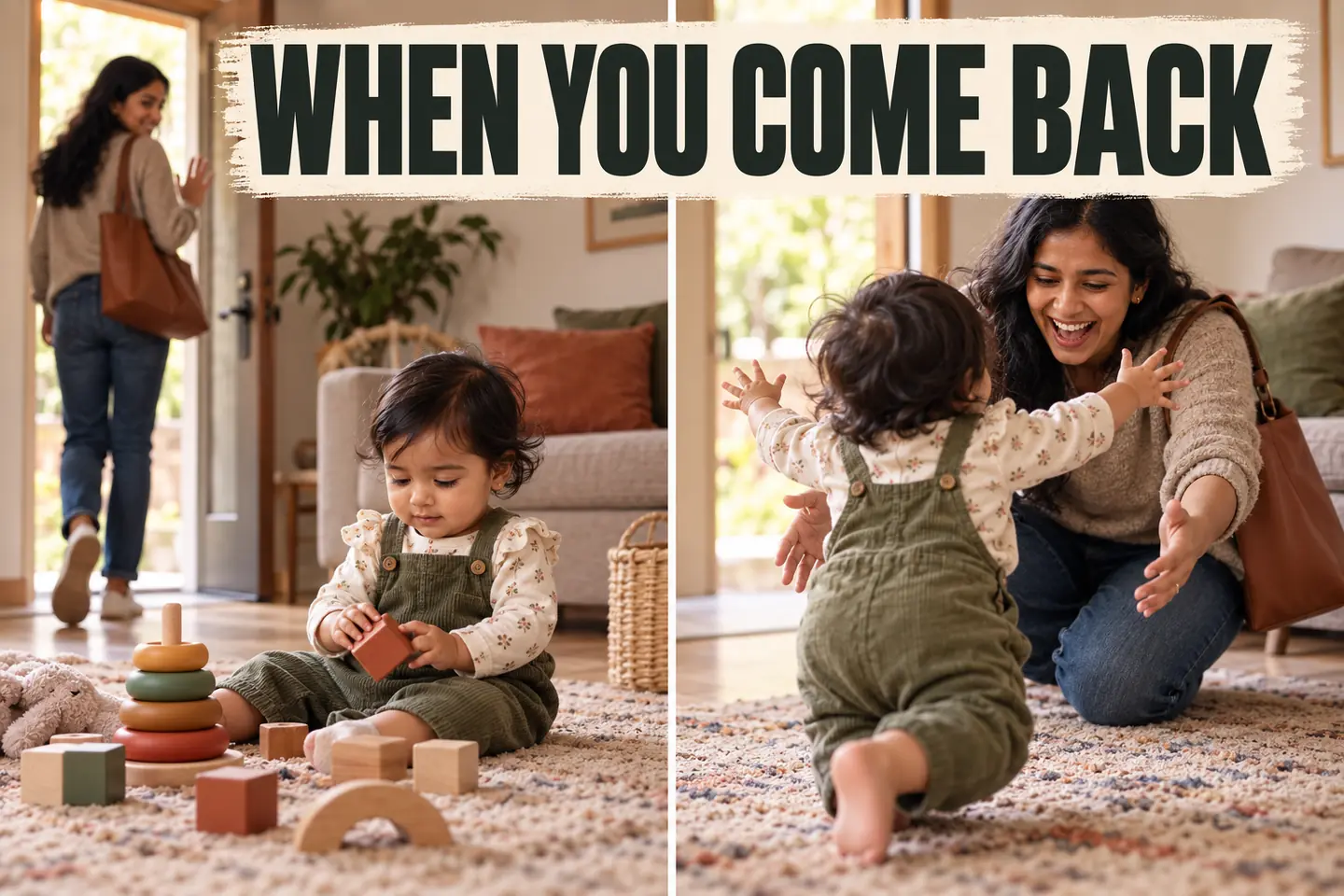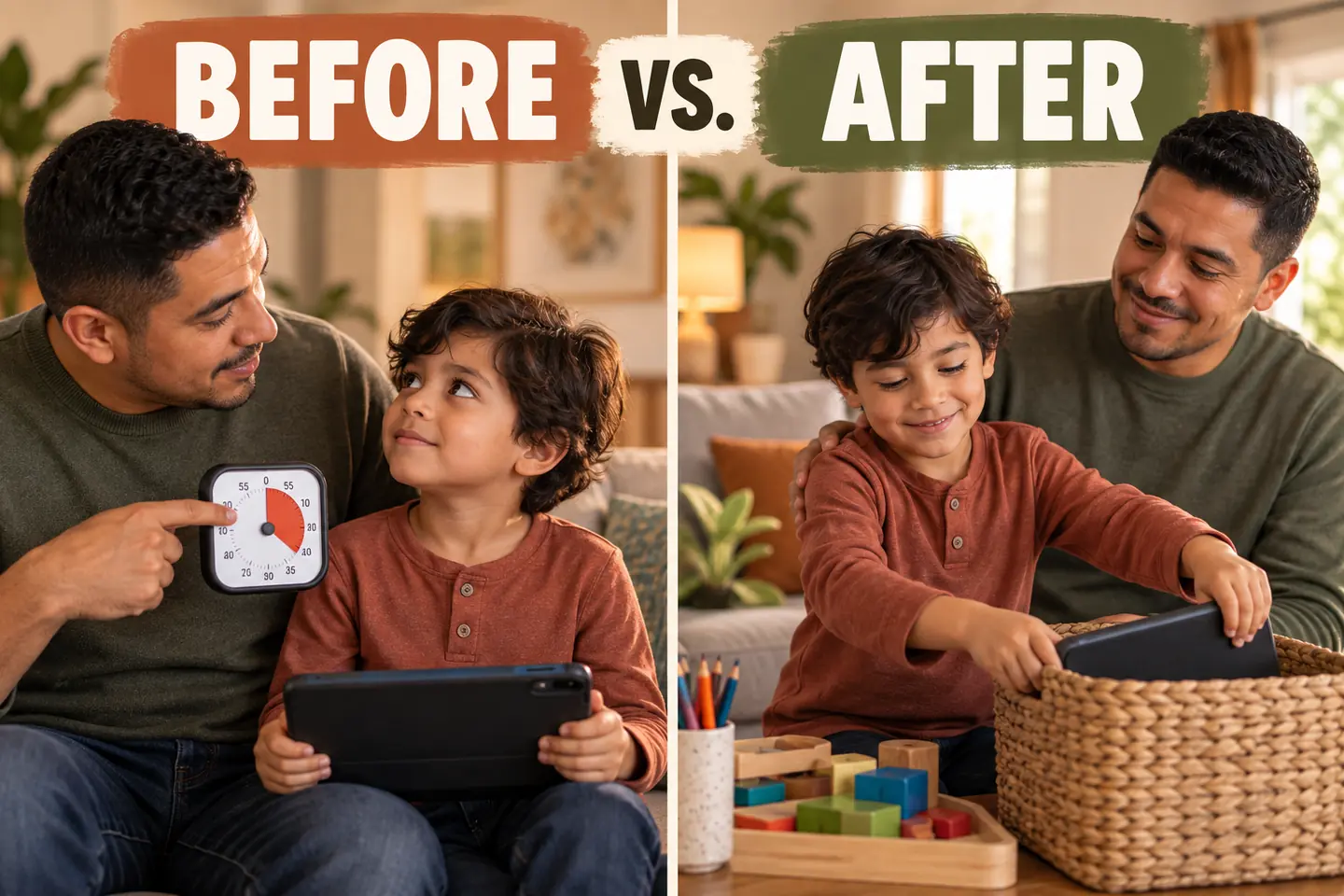
Agree on when the activity ends and what comes next before it begins. Keep the plan appropriate to your child and the activity.
You say the screen is finished. Your child says the episode is not. Suddenly you’re trying to create a rule while somebody is already disappointed. One useful place to change the conversation is before the activity starts.
Agree on a clear ending and a simple next activity. For example: “We’re watching this one episode. Then we’ll put the tablet away and choose a book.” This is about planning a transition, not choosing a universal screen-time limit.
Decide what “finished” means An episode ending, a saved game, and a timer are different kinds of stopping points. Choose an appropriate one in advance. When possible, avoid choosing an ending that requires your child to abandon work they can’t save.
The American Academy of Pediatrics recommends a family media plan that reflects your household’s needs and leaves room for other activities. Its guidance also suggests turning off autoplay and unnecessary notifications.
Make the next step concrete “Do something else” is a wide-open instruction. “Put the tablet on the shelf, then help me choose the fruit for our snack” gives the transition a shape. Pick an ordinary activity that’s actually available.
Offer a reminder as the ending approaches if your child finds that helpful. You might sit nearby for the final scene and say, “After this, we’re putting it away.” Avoid repeated countdowns if they make your child more anxious.
Expect feelings without moving the finish line A child can dislike the limit even when they understand it. “You wanted more time. It’s hard to stop something fun” acknowledges that feeling. You can be warm and still follow the agreed plan.
Support needs differ. Assistive communication and schoolwork should not be treated as interchangeable with entertainment. Adapt any plan to your child’s circumstances.
Model the part you can control When the family puts screens away for a meal, include your own phone where practical. Explain exceptions briefly rather than pretending adults never need one.
If the transition goes badly, revisit the plan at a calm time. Was the stopping point unclear? Was the next activity unrealistic? Try changing one part tomorrow. A family plan is something to adjust as you learn, not a measure of whether you’re a good parent.
Further reading
AAP: How to Make a Family Media Plan
Adapt these ideas to your family. For concerns about your child’s health or development, talk with a qualified professional who knows them.

Sophie Laurent
Simple routines & calmer evenings
About this author