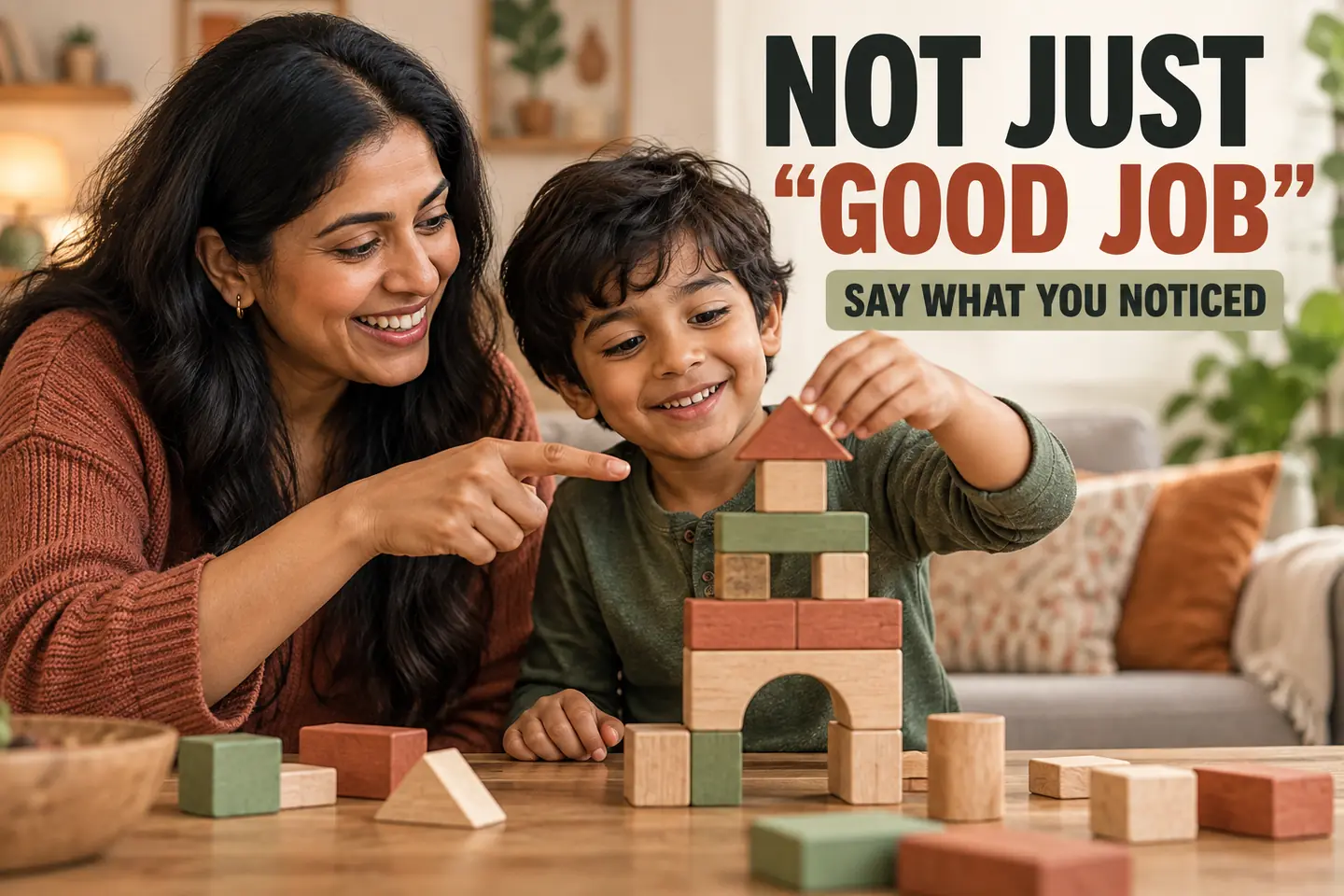
Add the action you noticed: “You kept trying that tricky piece,” or “You made space for your sister.”
“Good job” is not a forbidden phrase. You don’t have to audit every warm word that comes out of your mouth. But when you have a moment, adding a specific detail can make your attention easier for a child to understand.
Instead of searching for a bigger compliment, describe what just happened. “You put all the crayons back in their box” tells your child exactly what you saw.
Notice actions you actually observed Choose something real and immediate. “You waited while I finished talking.” “You moved the chair so your brother could sit down.” “You tried turning the puzzle piece around.”
The CDC’s toddler parenting guidance encourages attention and praise for positive behavior. In everyday life, that can be as simple as noticing the helpful thing your child just did and saying it out loud.
Separate appreciation from comparison Try not to add “unlike your brother” or “finally.” Those extra words can turn a friendly observation into a comparison or a reminder of earlier frustration.
Imagine your child hangs up a coat. “Thanks for putting your coat on the hook” stands on its own. You can leave out the speech about how many times you’ve asked before.
Be curious about things they create When your child brings you a drawing, you don’t have to decide whether it’s the best drawing ever. You can say, “I see a huge yellow circle. Tell me about it.” Let your child describe the picture rather than assigning a story to it.
Some children like enthusiastic attention. Others prefer a quiet comment or a smile. Match the moment and respect a child who doesn’t want a public celebration.
Let connection exist without an achievement Not every cuddle needs to follow a completed task. Affection, time together, and a sense of belonging should not depend on performance. You can enjoy your child’s company on the days when the crayons stay on the floor, too.
For a simple experiment, notice one specific helpful action today and say it out loud. No chart, reward, or perfect wording required. The aim is to make your attention clear and sincere.
Further reading
CDC: Positive Parenting Tips for Toddlers
Adapt these ideas to your family. For concerns about your child’s health or development, talk with a qualified professional who knows them.

Emma Bennett
Everyday parenting & big feelings
About this author