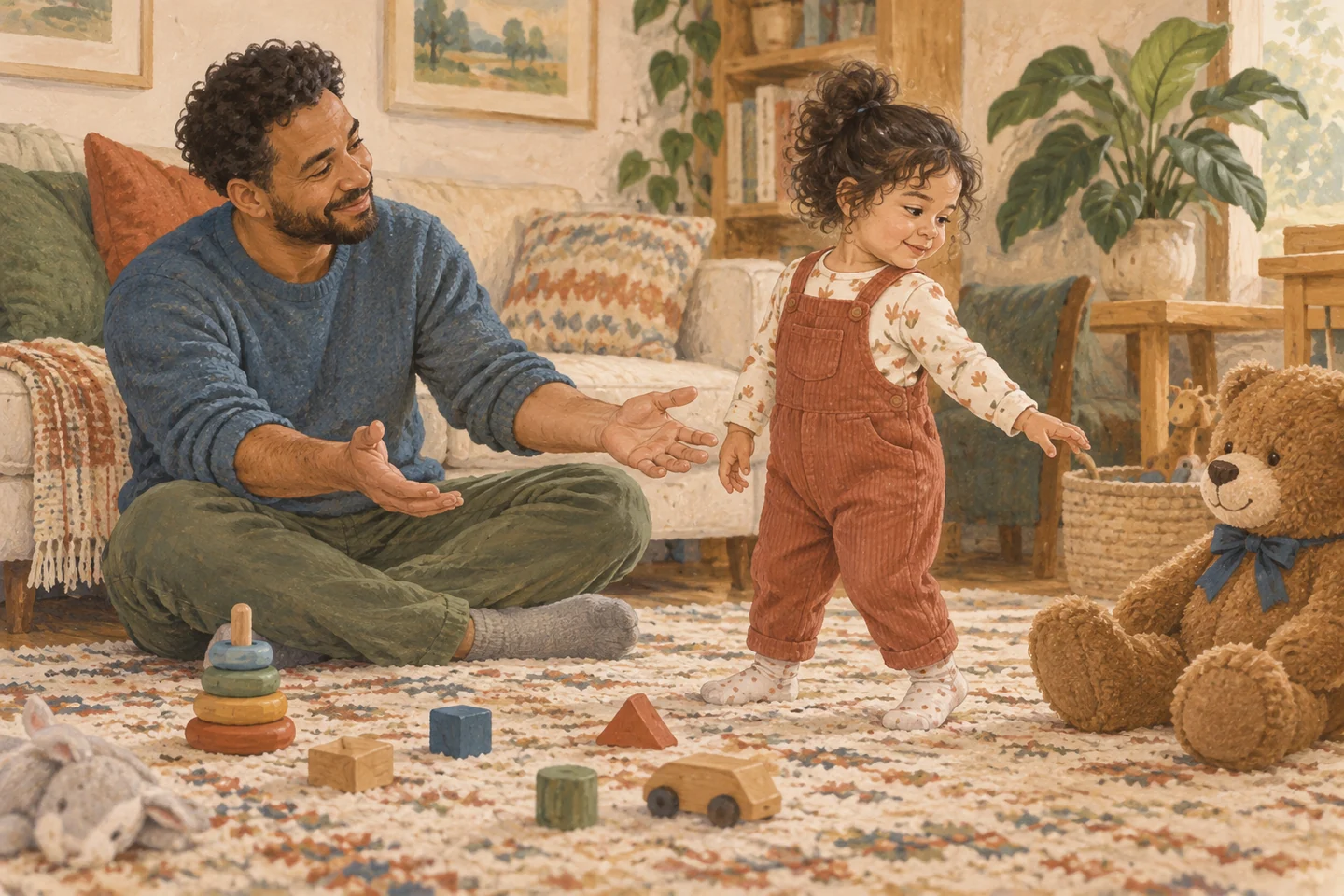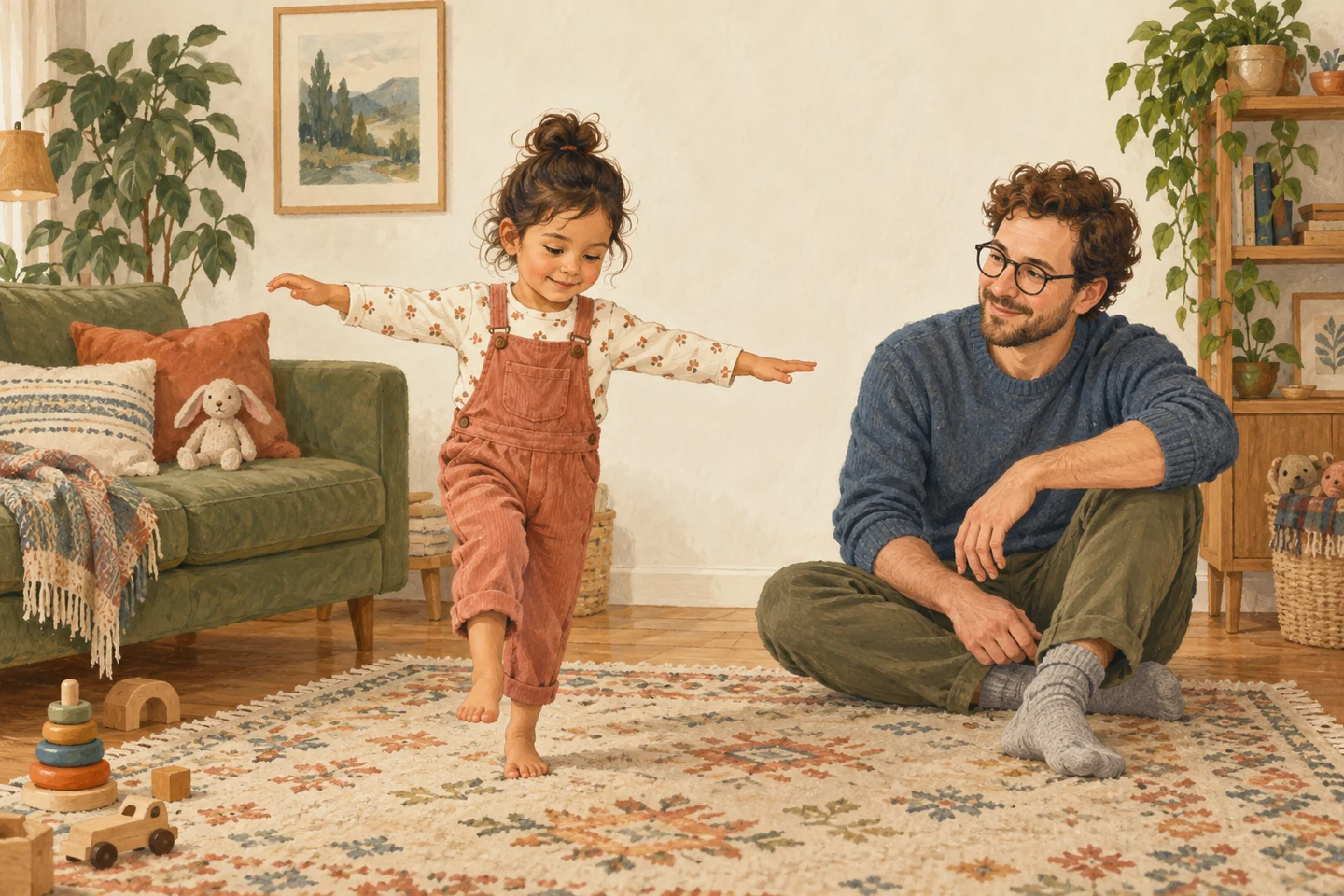
Give a little specific attention, then state when you need to stop watching. Your child can enjoy showing you without needing a constant audience.
“Watch this!” Your child balances for a second. You look. “Watch again!” They do it once more. You turn toward the washing, and another urgent request arrives before you have picked up a sock.
A repeated request to watch may be an invitation to share enjoyment, notice practice, or provide attention. Your child may be doing the “same” thing while noticing a difference you missed. You can acknowledge the effort without becoming an audience for every repetition all afternoon.
Describe the moment you actually saw
Try, “You kept your foot up while you counted,” or “This tower has a wide bottom.” A specific response tells your child what caught your attention. It also gives you something more natural to say than an increasingly distracted “Wow.”
The CDC's child-led play guidance encourages noticing and describing what a child does. You do not need to rate the performance against other children or announce that it is the best version anyone has ever seen.
For a child working on something new, you can ask, “Which part should I watch?” Their answer may reveal the detail that makes this attempt important to them.
Offer a period of real attention
If you can, stop the other task briefly and watch a few turns. You might say, “I’m watching these two jumps, then I’m going to finish folding.” Choose an amount of attention you are genuinely able to give.
Follow through when the agreed turns end. Keep the tone warm: “I saw both. Now I’m folding. You can keep practicing here.” Your child may dislike the transition, but the boundary does not require withdrawing interest in them altogether.
Help play continue without constant commentary
Ask whether they want to continue by themselves or choose another activity. Avoid making every turn lead to a new challenge. “Now can you do it faster?” can turn enjoyable practice into a task set by you.
Some children like giving a toy an audience role or showing their next attempt to another willing person. Offer that possibility without requiring someone else to take over indefinitely. A sibling is allowed to finish watching too.
Keep the activity safe even when enthusiasm is high
Do not encourage jumping from higher furniture or attempting a harder trick simply because repeated success has made the game exciting. Set the physical boundary first: “You can jump on this clear floor area. I won’t let you jump from the table.”
If the child needs active supervision for the activity, stopping your attention means stopping or changing that activity too. “Keep going while I look away” is only appropriate when the situation remains safe.
Look at the wider day without blaming either of you
If requests for attention feel constant, consider whether there is a manageable opportunity for shared play earlier in the day. You do not need to calculate a perfect daily quota or interpret every interruption as evidence you have not done enough.
It is also reasonable to explain the times you cannot watch: driving, cooking with heat, or caring for someone else. Use a clear next opportunity where you can offer one.
For the next “Watch me,” try a small adjustment: look fully, notice something specific, and be honest about your limit. Warm attention and a workable ending can belong in the same response.
Further reading
Adapt these ideas to your family. For concerns about your child’s health or development, talk with a qualified professional who knows them.

Emma Bennett
Everyday parenting & big feelings
About this author