Offer a quiet face-to-face moment and time to respond. Notice the whole interaction instead of trying to produce a smile.
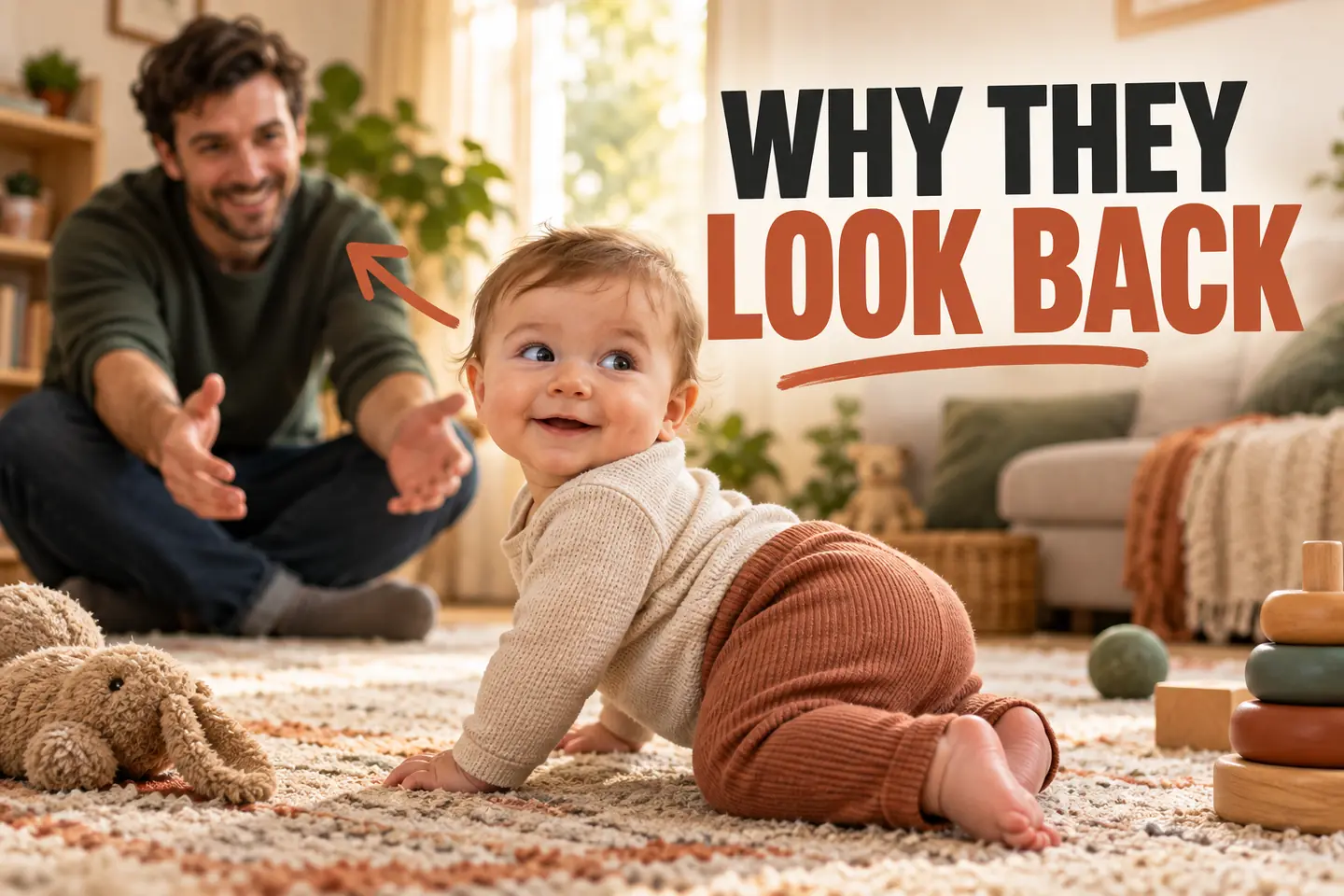
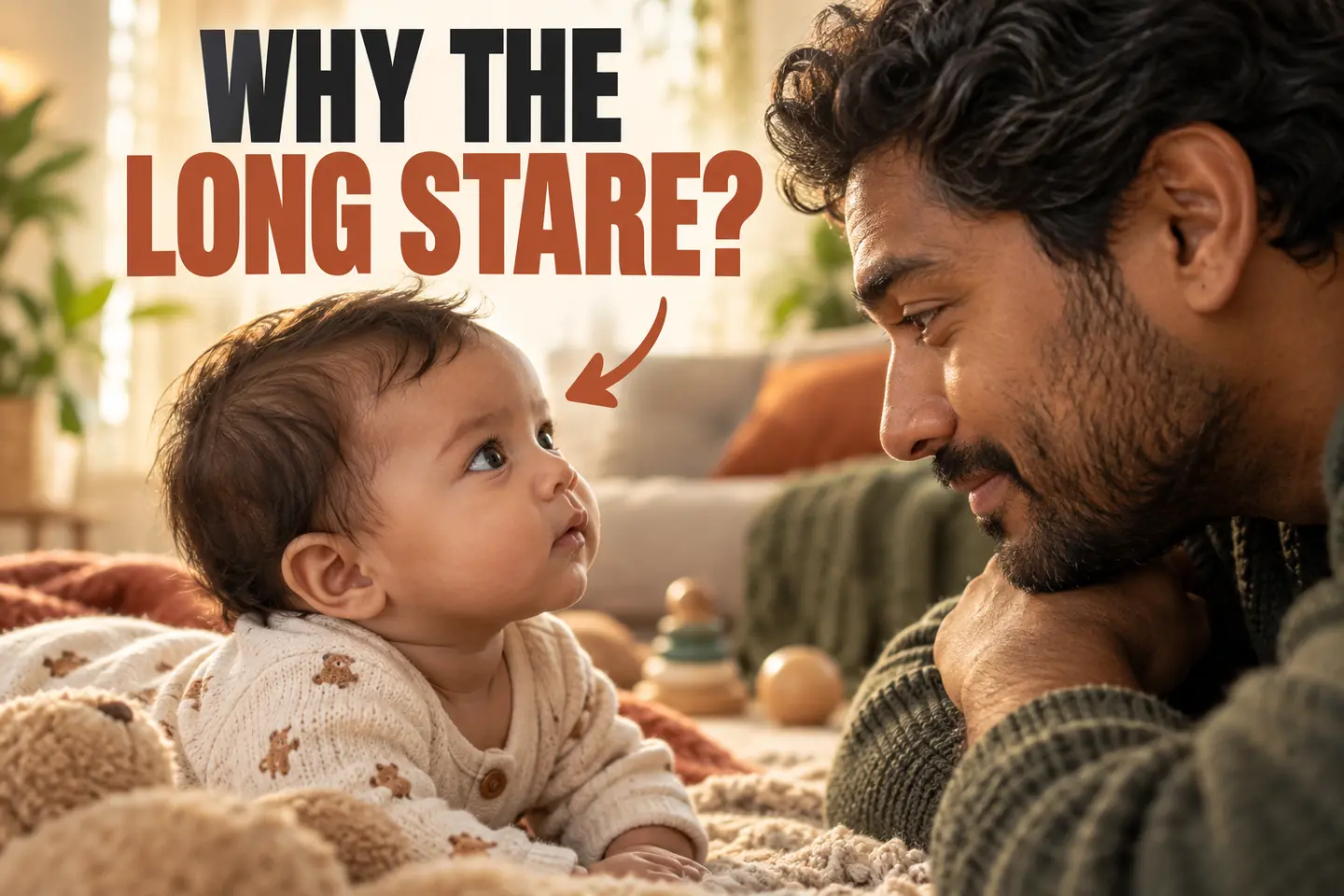
Your baby is looking straight at you. You smile, raise your eyebrows, and try the noise that worked yesterday. Nothing. Just a long, serious stare that makes you wonder whether you are missing a message.
A baby staring without smiling may simply be watching. Alertness, tiredness, hunger, comfort, and the activity around them all affect how they respond. Their expression cannot tell you one precise thought, and a neutral face during one interaction is not a verdict on your bond.
Looking is part of the conversation
Babies have more ways to participate than grinning. A small movement, a sound, a change in expression, or a shift of attention can be worth noticing. Early social exchanges are often quieter and less tidy than the cheerful examples in family videos.
The AAP describes babies spending their early months watching and listening to people around them. You do not need to turn every alert moment into entertainment. Sometimes your face and a few ordinary words are enough to share.
Try less performance and more room
Choose a moment when your baby seems comfortable and awake. Hold them securely or sit beside them in a safe position. Say something simple—“There you are”—then leave a pause.
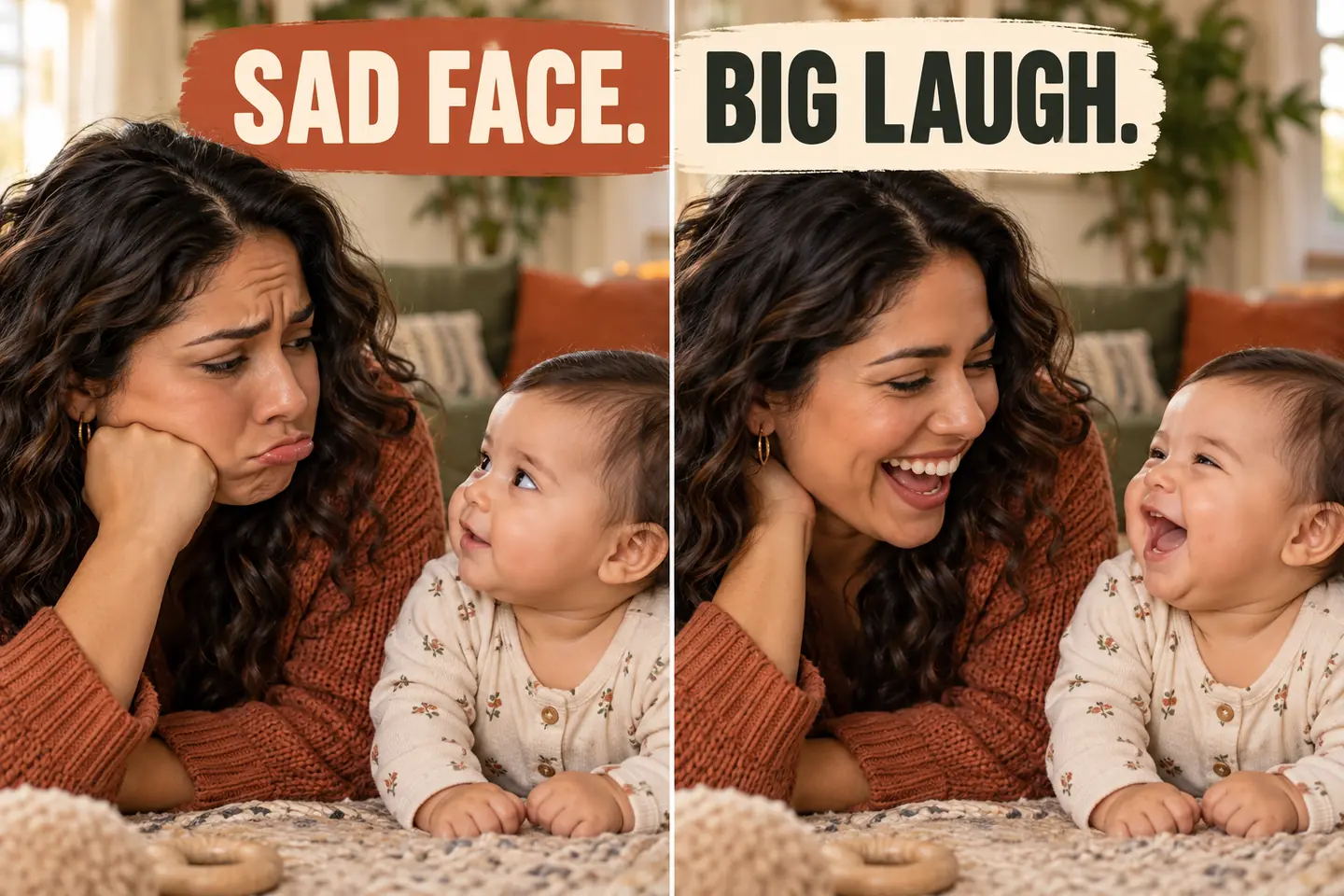
Watch what follows without rushing to add another sound. If they make a noise, you can answer softly. If they look away, allow the break. If they stay quietly interested, stay with that pace for a little while.
Harvard’s guidance on responsive exchanges emphasizes noticing a child's signal and responding. That does not require continuous eye contact or an adult filling every silence.
Why asking for a smile can become a distraction
It is easy to slip from enjoying your baby into checking whether they will perform an expected response. A phone comes out. Someone says, “Smile for Grandma.” The room gets louder as three adults try at once.
When that happens, put the camera aside and return to an ordinary interaction. Your baby does not need to supply a photograph to prove they enjoyed being with you. A family member can appreciate an attentive expression too.
Keep age and the broader pattern in view
A newborn and an older baby do not have the same social abilities. When you have a developmental question, use an age-appropriate milestone checklist and discuss it with your child's clinician rather than comparing one clip with another family's highlight reel.
Notice everyday opportunities: how your baby responds to a familiar voice, whether they use sounds or gestures, and how their engagement changes across the day. Write down a question if something consistently concerns you; you do not have to wait until you can explain it perfectly.
A staring episode is different from an ordinary gaze
If your baby seems unresponsive during an episode, has unusual repeated movements, or loses abilities they previously used, seek medical advice. Breathing difficulty or being difficult to wake needs urgent attention. Those situations deserve assessment rather than an explanation about concentration.
For a comfortable, alert baby quietly studying you, take the pressure off the smile. Speak warmly, pause, and allow the exchange to be small. Connection does not always come with a grin.
Further reading
AAP: Emotional and Social Development, Birth Through 3 Months
Harvard Center on the Developing Child: Serve and Return
Adapt these ideas to your family. For concerns about your child’s health or development, talk with a qualified professional who knows them.

Emma Bennett
Everyday parenting & big feelings
About this author