Offer a steady, honest response and a safe next step. Your child can use your cues while still having a different feeling from yours.
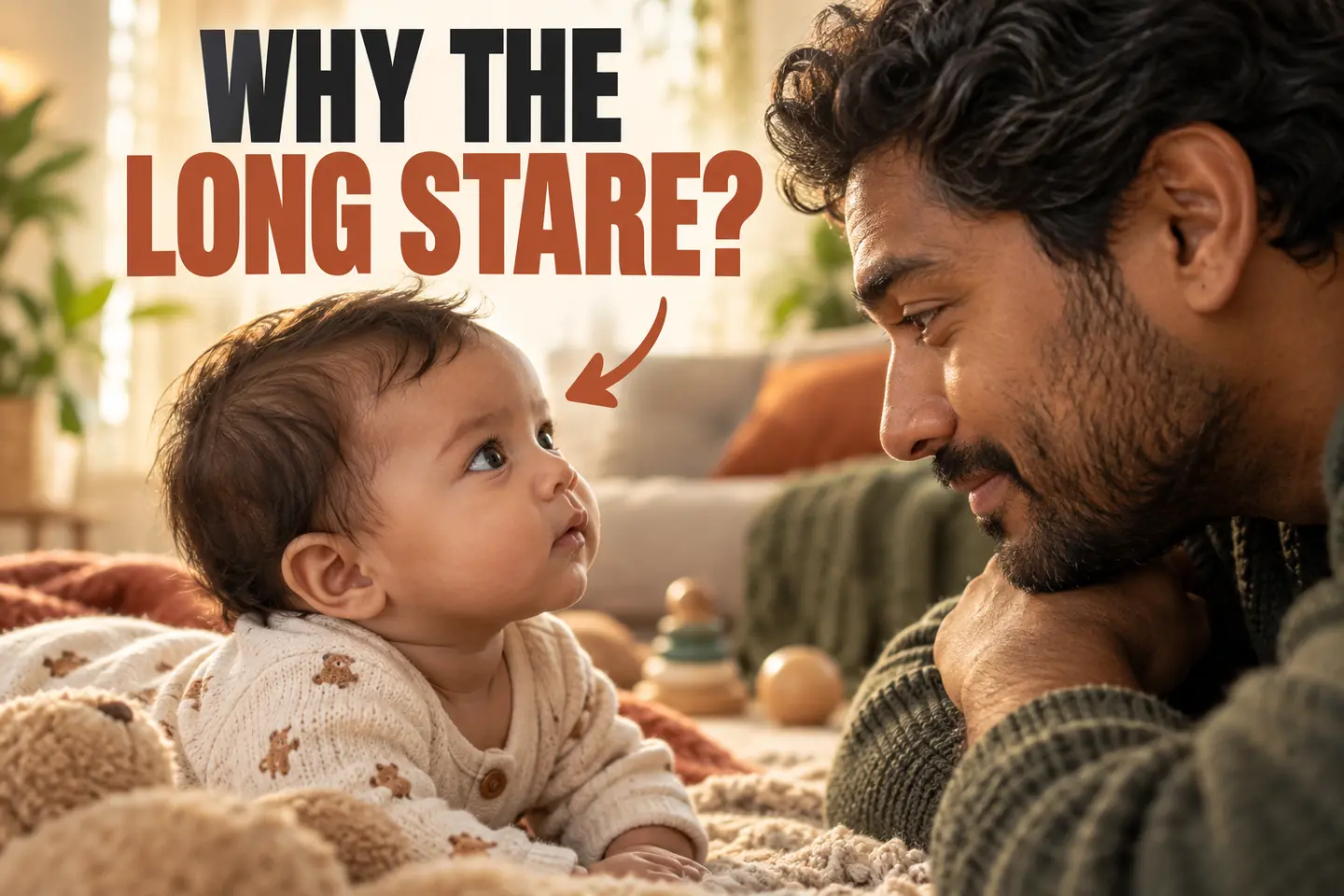
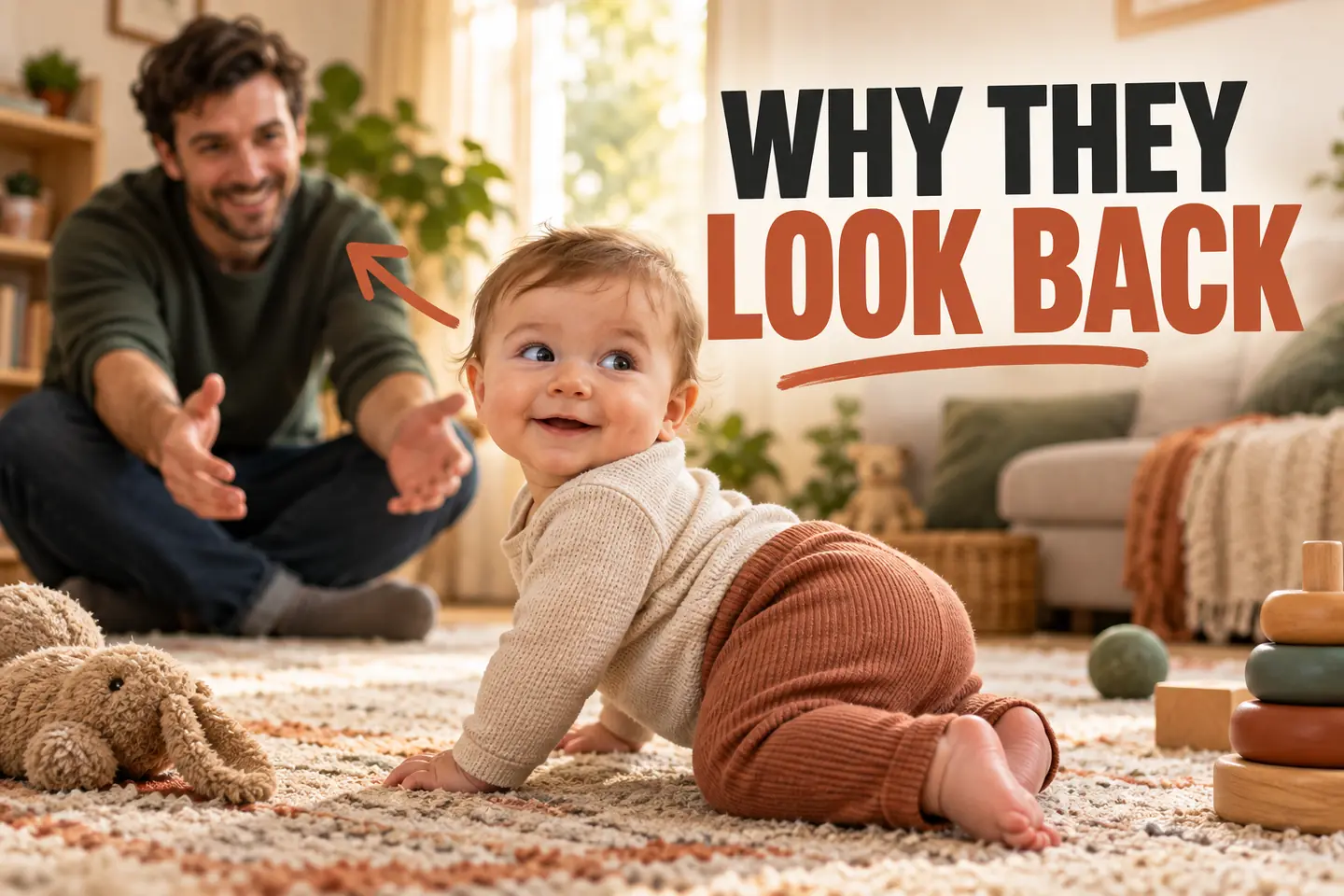
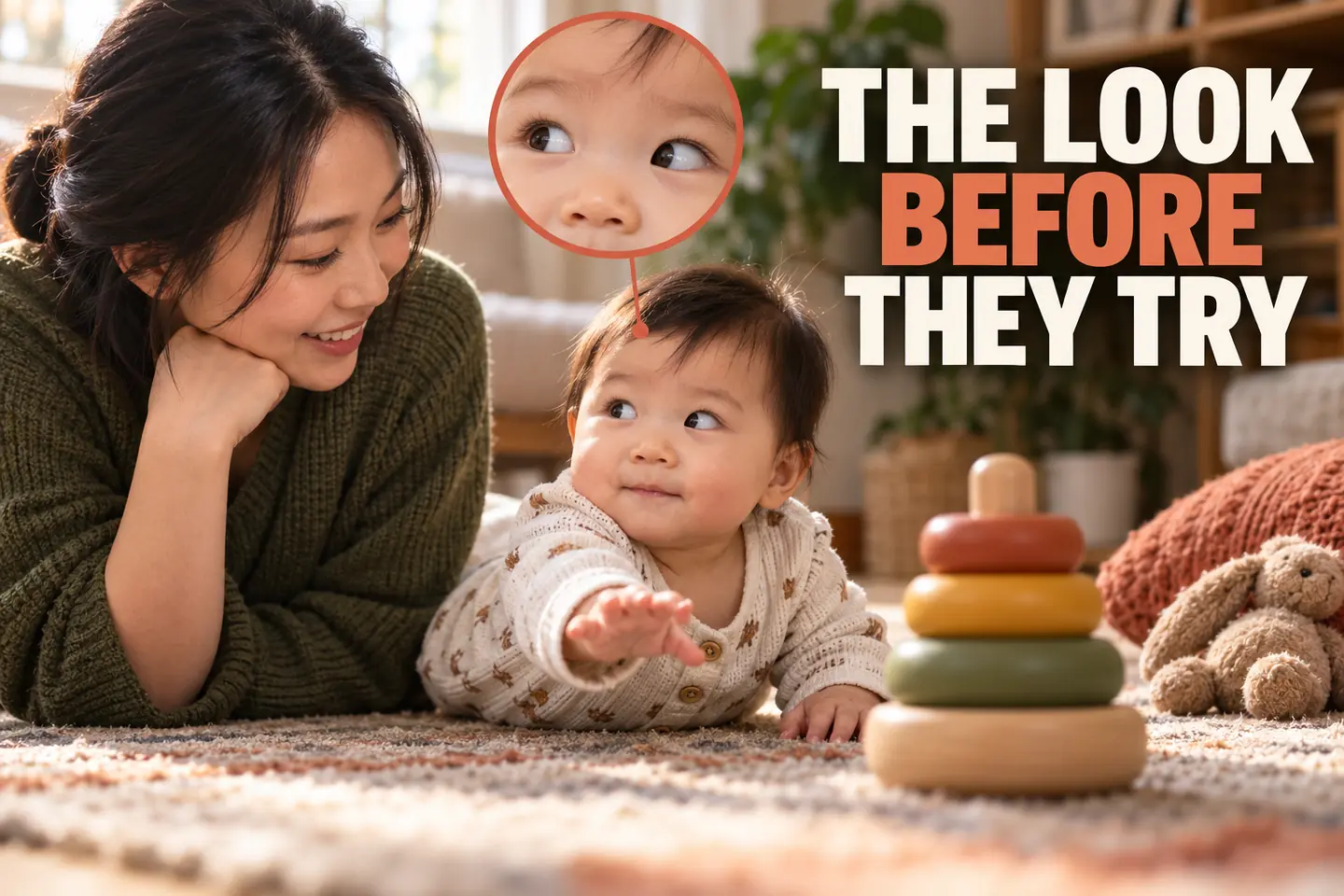
A toy starts moving. Your child stops, watches it, and turns toward you before getting closer. You look interested. They study the toy again. It is a quick exchange, easy to miss until you start noticing how often it happens.
Children may look at a familiar adult when deciding how to respond to something unfamiliar. Developmental researchers call the use of another person's emotional cues “social referencing.” A glance alone does not prove that is what happened, but it can be an opportunity to offer useful information and support.
Your expression is one part of the situation
The CDC includes looking at a caregiver's face to judge a new situation among common two-year milestones. Babies and toddlers also respond to the object, the setting, previous experience, and their own preferences.
You are not a remote control for your child's emotions. A calm smile may help, but it cannot guarantee that a noisy toy, unfamiliar animal, or new person feels comfortable. Leave room for your child to react differently from you.
Show interest without rushing the next step
If an unfamiliar toy is safe, sit nearby and describe it: “It’s moving across the floor.” You might watch together before touching it. If your child stays back, that can be the activity for now.
Avoid moving the object closer every time they hesitate. What feels like encouragement from an adult can remove the distance a child was using to become comfortable. Offer a choice such as, “Watch from here or come beside me?” when both options are safe.
Be clear when something really is unsafe
Do not rely on your face to communicate a safety rule. Move your child away from hazards and say what needs to happen: “That pan is hot. I’m keeping your hand away.”
Likewise, being relaxed around animals does not make every approach safe. Ask the owner, follow appropriate safety guidance, and supervise rather than encouraging a child forward just to show that there is nothing to fear.
Warmth and a firm limit can fit in the same response. Your job is to manage the actual risk, not merely appear confident.
You do not need a perfectly calm face all day
A sudden noise may startle you too. Once you understand what happened, name it simply: “That surprised me. It was the door closing.” This gives your child more useful context than pretending they did not see you jump.
If you are uncertain, be honest: “I’m going to check before we go closer.” Children can see adults pause, gather information, and decide. That is a workable model for unfamiliar situations.
Make room for different ways of checking in
Some children look directly at your face; others move closer, call your name, reach for a hand, or keep listening while looking elsewhere. Do not insist on eye contact before offering reassurance or information.
Notice what helps your child understand the situation. A short explanation, a demonstration, extra distance, or a quieter setting may matter more than an encouraging expression alone.
The next time your child turns toward you, answer the moment rather than analyzing the glance. Be available, make the situation safe, and offer one clear cue. Then allow them time to decide what they are ready to do.
Further reading
Mireault and colleagues: Social Looking, Social Referencing and Humor Perception
Adapt these ideas to your family. For concerns about your child’s health or development, talk with a qualified professional who knows them.

Emma Bennett
Everyday parenting & big feelings
About this author