Treat a giggle as a moment of shared play, not proof your baby understands sadness. Keep the game gentle and stop when interest fades.
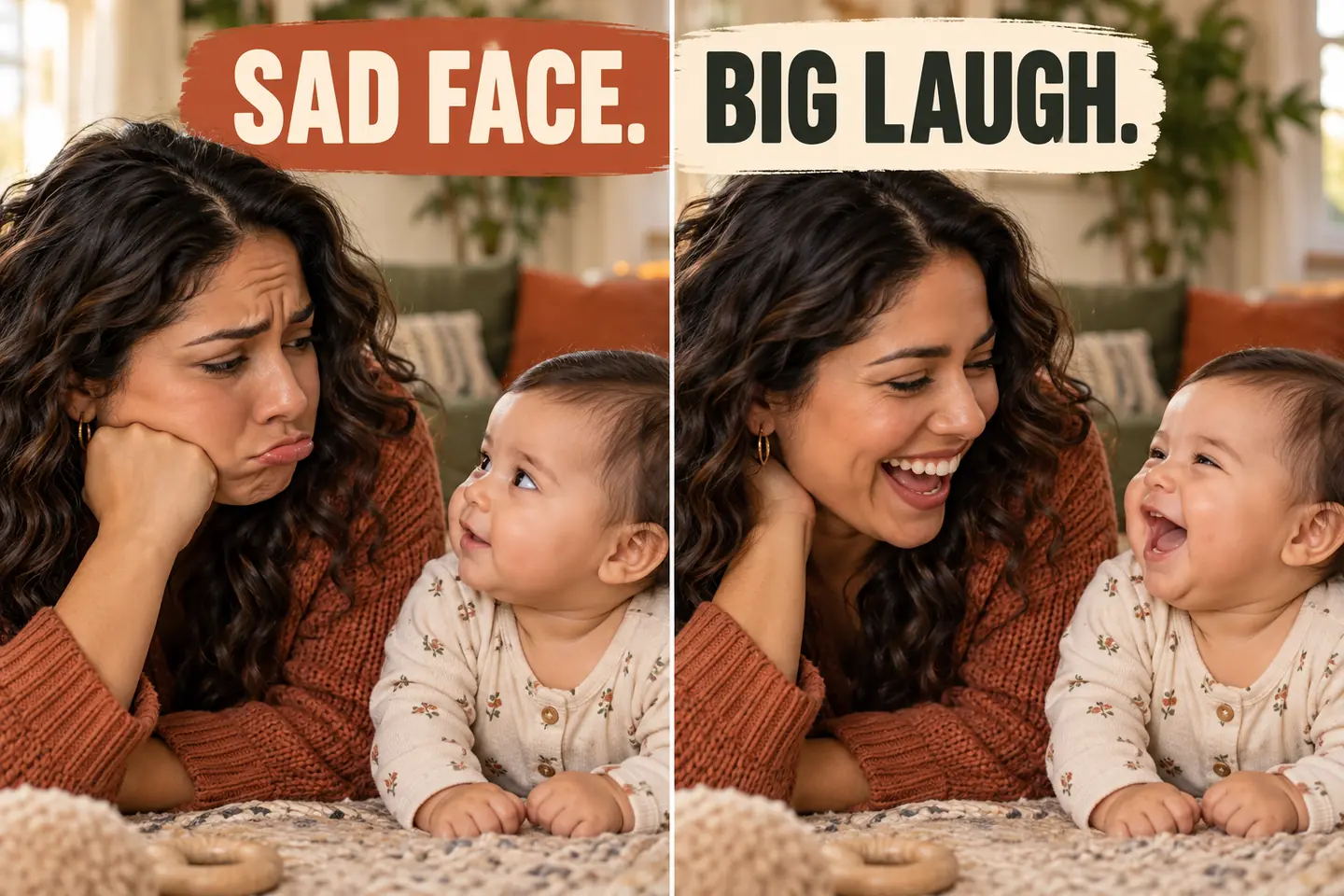
You make an enormous theatrical pout over a toy that has “escaped.” Your baby laughs. The bigger the harmless performance, the bigger the grin. Then you wonder: do they know you are pretending, or are they laughing because you look upset?
A baby's laughter cannot answer that question by itself. An exaggerated face, an unexpected sound, and your playful timing may all be interesting or amusing. It does not show that your baby enjoys real distress, and it is not a reliable test of empathy.
The whole game supplies clues
A pretend pout is rarely just a sad mouth. There may be a funny voice, a repeated pause, a smile between turns, and a familiar adult who clearly keeps the interaction playful. Your baby is experiencing that whole exchange.
In a small study of infants aged five to seven months, researchers found that parents' humorous cues influenced babies' reactions to an absurd event. The study did not test whether babies understood pretend sadness or enjoyed someone being hurt. That distinction matters when translating research into a family game.
Keep surprise small and friendly
Try a silly sound, a slow exaggerated expression, or a familiar peekaboo routine. Give your baby time to respond before repeating. A little unpredictability can be fun without loud shouting, frightening masks, or pretending something dangerous has happened.
If your baby turns away, stiffens, cries, or stops seeming interested, return to your ordinary voice and stop. Do not keep escalating because the first attempt produced a laugh. The most useful feedback is how comfortable the whole interaction appears.
Skip games built around real worry
There is no need to pretend to abandon your baby or to stage prolonged crying to see what they will do. You can enjoy humor without making the relationship feel uncertain.
For an older toddler who asks whether you are sad, keep it clear: “That was my silly pretend face. I’m okay.” If they look concerned, reassure them directly. Winning another laugh is less important than making the game understandable and comfortable.
What if your baby laughs when you really are upset?
Respond to the situation without assigning a hurtful motive. A baby may react to a sudden sound or expression without understanding what caused it. With a toddler, laughter can also happen in an awkward or emotionally charged moment.
If something hurts, keep the boundary plain: “That hurt my face. I’m moving your hand.” Then address the practical problem. Avoid asking a young child to demonstrate remorse before you stop a painful interaction.
Later, you can model care in ordinary ways: bringing a tissue to someone who asks for one, checking on a person who fell, or saying, “Are you okay?” There is no need to turn the funny-face game into an empathy lesson.
Enjoy the laugh without grading the baby
Some babies adore exaggerated expressions; others prefer a quiet song or a repeated movement. A favorite joke can change from one day to the next. You are not aiming for a certain amount of laughter or an advanced sense of humor.
Keep the interaction warm, watch your baby's cues, and stop while it still feels pleasant. The shared moment is valuable on its own, even when you cannot say exactly which part of the joke your baby found funny.
Further reading
Mireault and colleagues: Infant Humor in the Context of Parental Affect
Adapt these ideas to your family. For concerns about your child’s health or development, talk with a qualified professional who knows them.

Sophie Laurent
Simple routines & calmer evenings
About this author