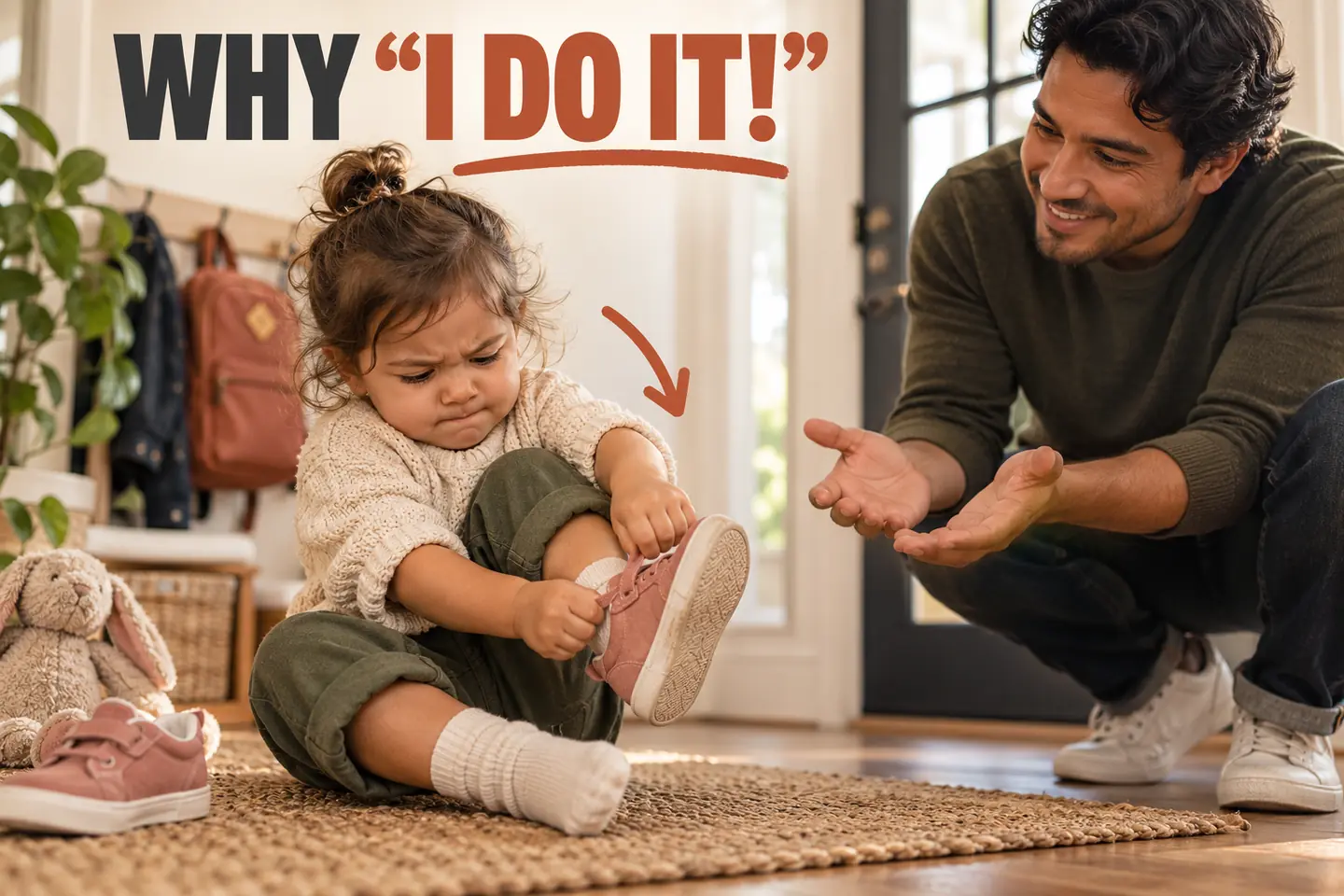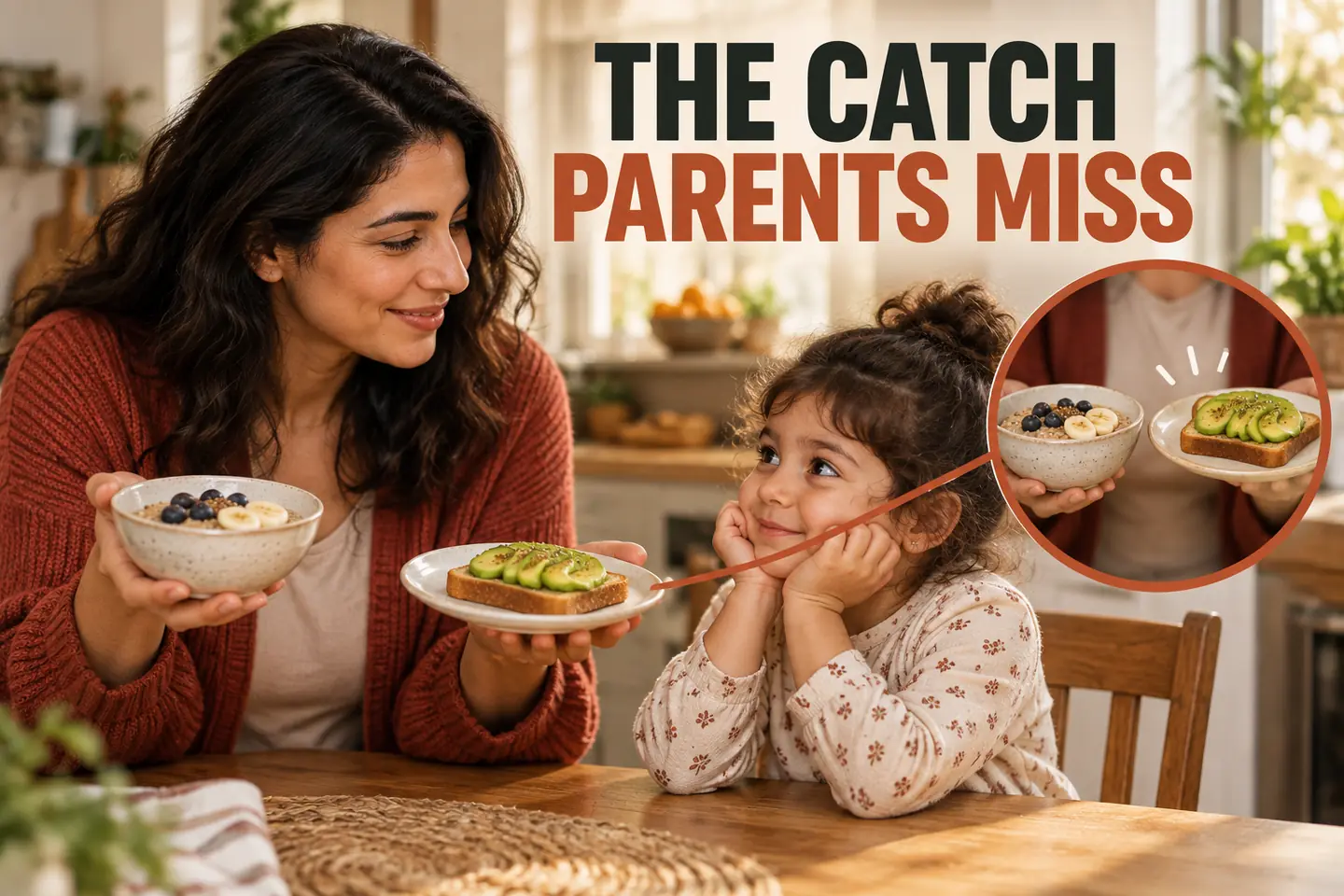
Offer two different options you are willing to honor. Keep the necessary boundary clear, then give your child a manageable part of the decision.
“Do you want to leave now?” sounds friendly—until the answer is no and leaving was never optional. You’re left trying to turn a question into an instruction while your child wonders why their answer did not count.
That’s where a small, genuine choice can be useful. Keep the necessary part clear, and offer control over a detail you can actually leave to your child.
In February 2026, PEOPLE reported more than 7 million views for Amy Wade’s TikTok about playful parenting reframes, including pretend choices. Before trying a choice of your own, check one thing: are you offering two different options you’re actually happy to follow through on?
Find the part that really is optional Imagine it’s time to get ready for a walk. Leaving may be the adult’s decision, but which suitable hat to wear could be the child’s. You might say: “We’re getting ready to go. Would you like the striped hat or the plain one?”
Before speaking, check that you can accept either answer. If you will reject the striped hat, don’t include it just to make the question sound balanced.
The CDC’s guidance on directions for young children recommends offering limited choices when appropriate. Both options should be acceptable to the adult, and instructions should remain clear and suited to the child’s ability.
Try three everyday examples For getting dressed: “Would you like to put your socks on sitting here or on the rug?”
For a shared task: “Would you like to carry the napkins or put out the placemats?”
For leaving an activity: “We’re putting this away. Do you want to move the pieces into the box, or would you like me to help while you hold it?”
Use whichever words sound natural in your house. The choices need to make sense for the task and for your particular child. Some children benefit from seeing the two items or having a little more processing time.
Stop adding options when the answer is difficult A hesitant child doesn’t necessarily need five more choices. They may need help understanding the request, a pause, or assistance with the task itself.
If neither option works, acknowledge that without launching a long negotiation: “You don’t want either. I can help you get started.” Then calmly guide the necessary next step. Don’t turn deciding into a timed test or threaten an unrelated punishment for hesitating.
When there’s an immediate safety need, act on it. Preventing a child from stepping into traffic is not a moment to offer a menu of options.
Keep a choice from becoming a trick Children can learn that their preferences matter only if adults follow through on the decisions they offer. If you say they may choose the book, try not to replace it because you prefer another story.
And if the choice can’t happen after all, explain plainly: “I offered that before I checked. It isn’t available, and I’m sorry.” A brief correction is more respectful than pretending the child misunderstood.
There will still be disappointment, resistance, and days when a direct request is easier. The aim is not to outsmart your child. It’s to make your words match the decision you’re actually asking them to make.
Further reading
PEOPLE: Amy Wade’s viral parenting tricks (February 21, 2026)
CDC: Tips for Giving Directions
Adapt these ideas to your family. For concerns about your child’s health or development, talk with a qualified professional who knows them.

Emma Bennett
Everyday parenting & big feelings
About this author