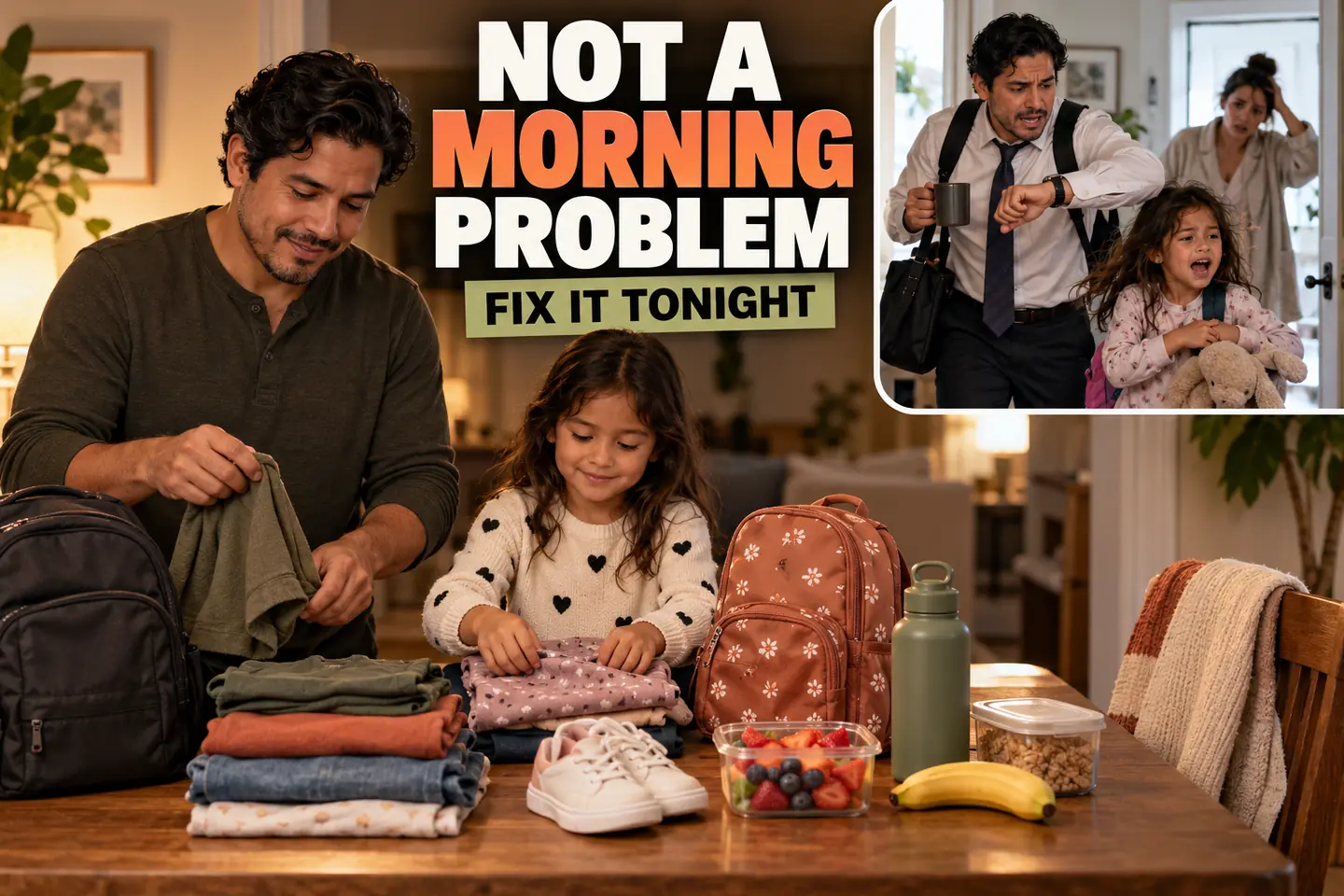
Pick one place for tomorrow’s essentials, decide on clothes, and write down the very first morning step.
The morning doesn’t have to become a productivity contest. Sometimes the most useful preparation is simply removing one decision you know will arrive when everybody is rushed.
Set a timer for ten minutes and tackle the things that usually slow you down. If you only have two minutes, find the shoes and stop there. Even one less thing to hunt for can help.
Minutes 1–3: choose one landing spot Pick an accessible place for the bag, shoes, and any ordinary items that need to leave with you. It could be a hook and a basket by the door. You don’t need a new organizer.
Check the actual contents of the bag. A neatly positioned backpack is less useful if the thing you need is still on the kitchen table. Keep medicines, keys, and other adult-only items out of children’s reach rather than in an open child-accessible basket.
Minutes 4–6: settle one repeated decision Choose clothes together if clothing is often a sticking point. Offer two suitable options and accept the choice. Put the outfit somewhere your child can find it.
If breakfast decisions take longer than clothes, agree on tomorrow’s available breakfast instead. Solve the problem your family actually has, not the one a perfect-looking checklist suggests you should have.
Minutes 7–10: make the beginning obvious Write or draw the first few steps in the order your child will do them. Keep each step concrete: get dressed, eat breakfast, brush teeth with help, then shoes. Adapt this sequence to your household.
The CDC recommends giving young children one clear direction at a time. Even with a visual list, you can point to the current step rather than reciting the whole morning plan.
Leave space for real life A spilled drink, a bad night, or a missing school note can still happen. The reset doesn’t mean the morning must run perfectly. It gives you a few fewer things to locate or decide.
After trying it, ask yourself one question: “What were we still searching for?” Add that item to the landing spot tomorrow, or change the spot if nobody uses it. Keep the useful part and let the rest go.
Further reading
CDC: Tips for Giving Directions
Adapt these ideas to your family. For concerns about your child’s health or development, talk with a qualified professional who knows them.

Sophie Laurent
Simple routines & calmer evenings
About this author