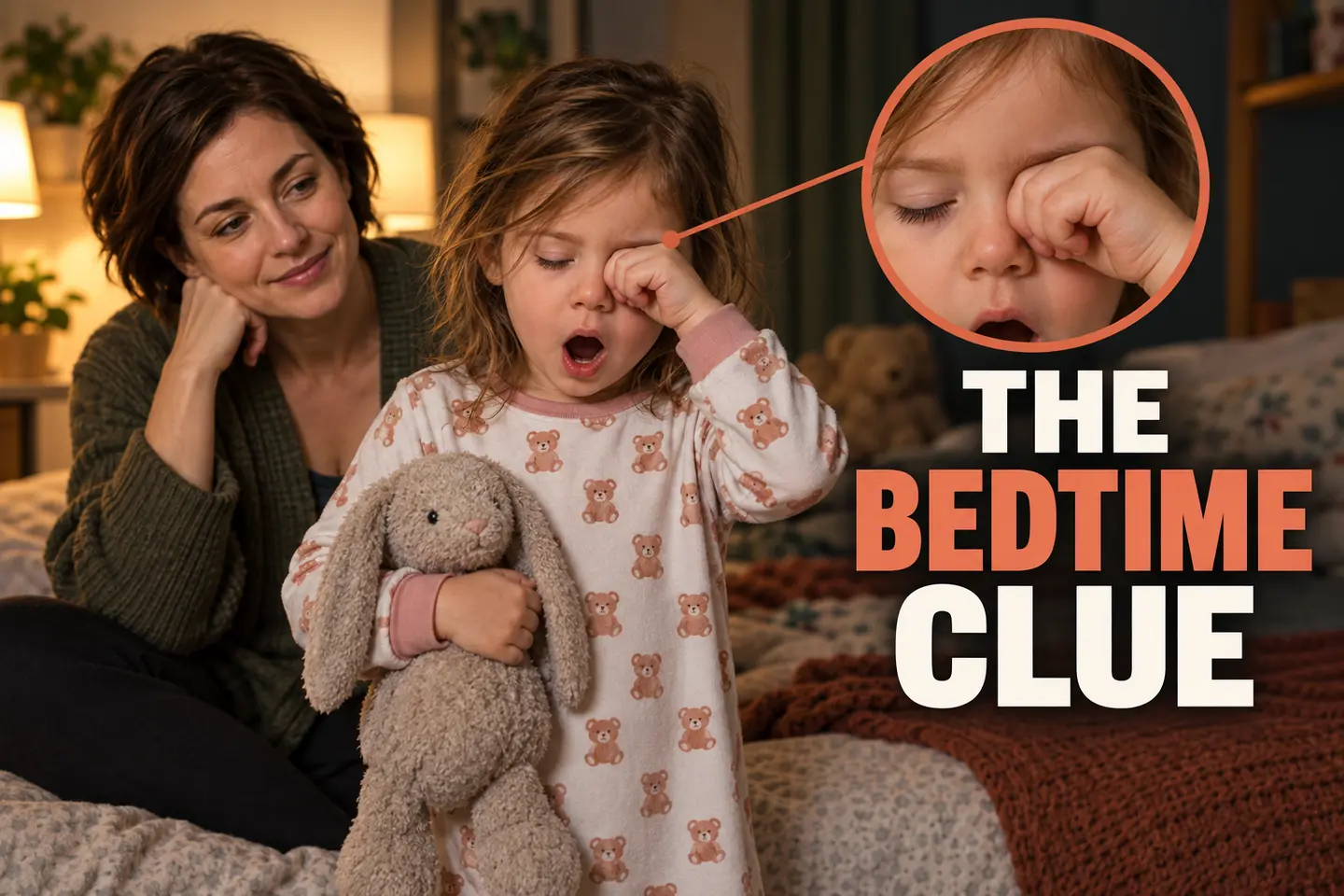
Agree on a short, predictable sequence before bedtime begins. Keep room for warmth without renegotiating every step.
You finish the book. A little hand reaches for another. Then there’s a request for water, a different blanket, and a story you’ve already read twice. Bedtime can become a negotiation when nobody knows what “finished” will look like.
One change to experiment with: decide the shape of the routine before your child is tired and you’re running out of patience. This is a routine idea for preschool and school-age children, not infant sleep advice.
Make the ending visible at the start During a quiet part of the day, agree on a simple sequence. For example: pajamas, brushing teeth with help, two short books, a cuddle, and goodnight. The American Academy of Pediatrics’ Brush, Book, Bed guidance supports a predictable evening sequence and a regular bedtime.
Put the chosen books beside the bed. If your child enjoys drawing, invite them to sketch the steps on a piece of paper. The drawings don’t need to be tidy; they only need to make sense to your child.
Offer choices inside the routine “Which of these two books comes first?” is a choice with a clear finish. “What do you want to do now?” leaves the evening wide open. You might let your child choose the pajamas or decide which toy listens to the story.
Read at a comfortable pace. A shorter book enjoyed together is more workable than rushing through a long book while both of you watch the clock.
Prepare a kind last sentence Try: “That was our last book. I loved reading with you. Now it’s time for goodnight.” If your child asks again, respond warmly and briefly. You don’t need to invent a new explanation each time.
Check genuine needs. Pain, fear, thirst, or a change in circumstances deserves attention; a routine is not a reason to ignore distress. If something has changed, adjust the plan rather than forcing it through.
Leave room for an imperfect evening Choose a routine your family can manage on an ordinary busy day. After a late outing, you might do a shorter version. Return to the usual sequence when you can. Persistent sleep difficulties are worth discussing with your child’s clinician; a tidy bedtime checklist can’t solve every sleep problem.
Further reading
Adapt these ideas to your family. For concerns about your child’s health or development, talk with a qualified professional who knows them.

Sophie Laurent
Simple routines & calmer evenings
About this author